


July 25, 2026

AI Search for Travel
Be the first name AI mentions to travelers
Measure and optimize how ChatGPT, Perplexity, Claude and Gemini mention your hotel or destinations. Track your AI Share of Voice, see who gets cited, and act on it
.png)

Trusted by 300+ travel companies
.webp)




What you get
Everything you need to win AI search
Monitor how AI engines answer travel queries, measure your position against competitors, and turn each insight into action.


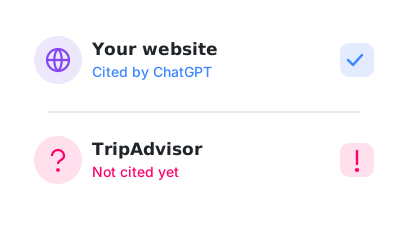
Source Graph
Map the pages, reviews, guides, and blogs that feed your AI presence. See which sources the models trust, and which ones you are missing.


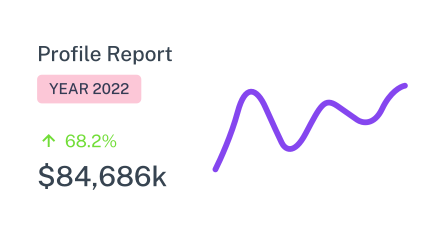
Share of Voice
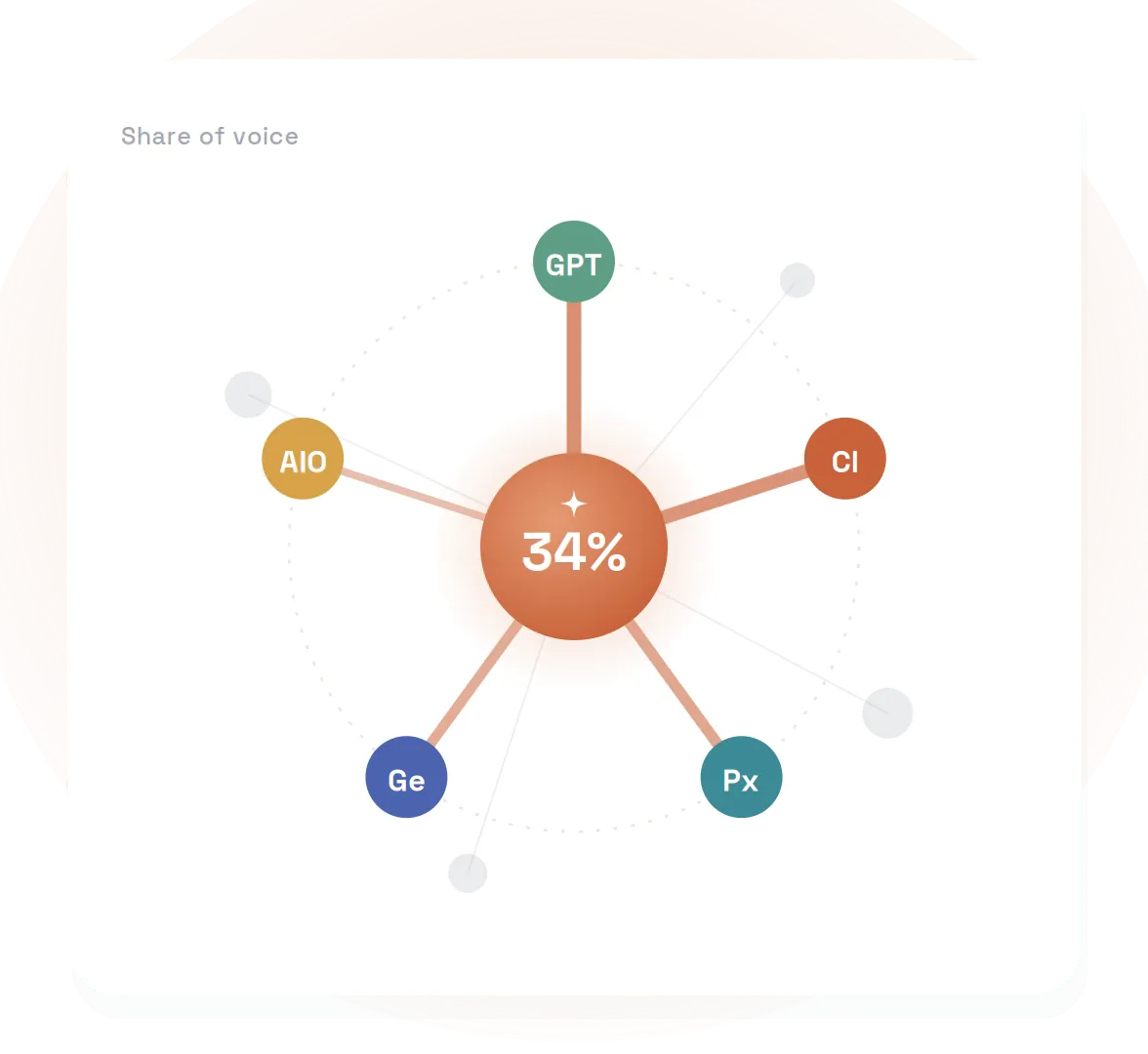
Measure your mention share against competitors, by prompt cluster. Know exactly where you lead and where you lose the recommendation.





Multi-Model Tracking
See how ChatGPT, Perplexity, Gemini, AI Overview, and Claude answer real booking and travel queries. Text and image prompts, checked every 24 hours.

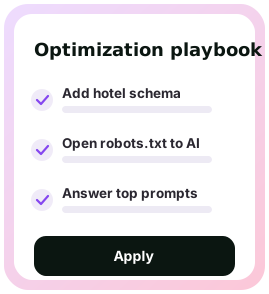


Optimization Playbooks
Every insight comes with a next step. Close the gaps the models repeat, and improve how AI ranks and recommends you.


Why this matters
In travel, reputation drives the booking. Today your reputation is not only what review sites say about you. It is what Large Language Models know about your property and your territory. When a traveler asks an AI for the best place to stay, you are either the recommendation or you are invisible.
Explore the Power
The AI Visibility Engine for Hospitality and Tourism
Complete share of voice, competitor benchmarking, and narrative control across the conversational web.
For Hotels: Know exactly what AI says about your property
When a traveler asks "What is the best boutique hotel in Florence under 250 euro?", we show you who gets mentioned, by which models, through which talking points, and from which sources.

Rankings on ChatGPT, Claude, Perplexity, Gemini, and AI Overview
Competitor Share of Voice by prompt cluster
Source map: which sites make AI mention your hotel


For Destinations: Orchestrate the AI narrative of your region
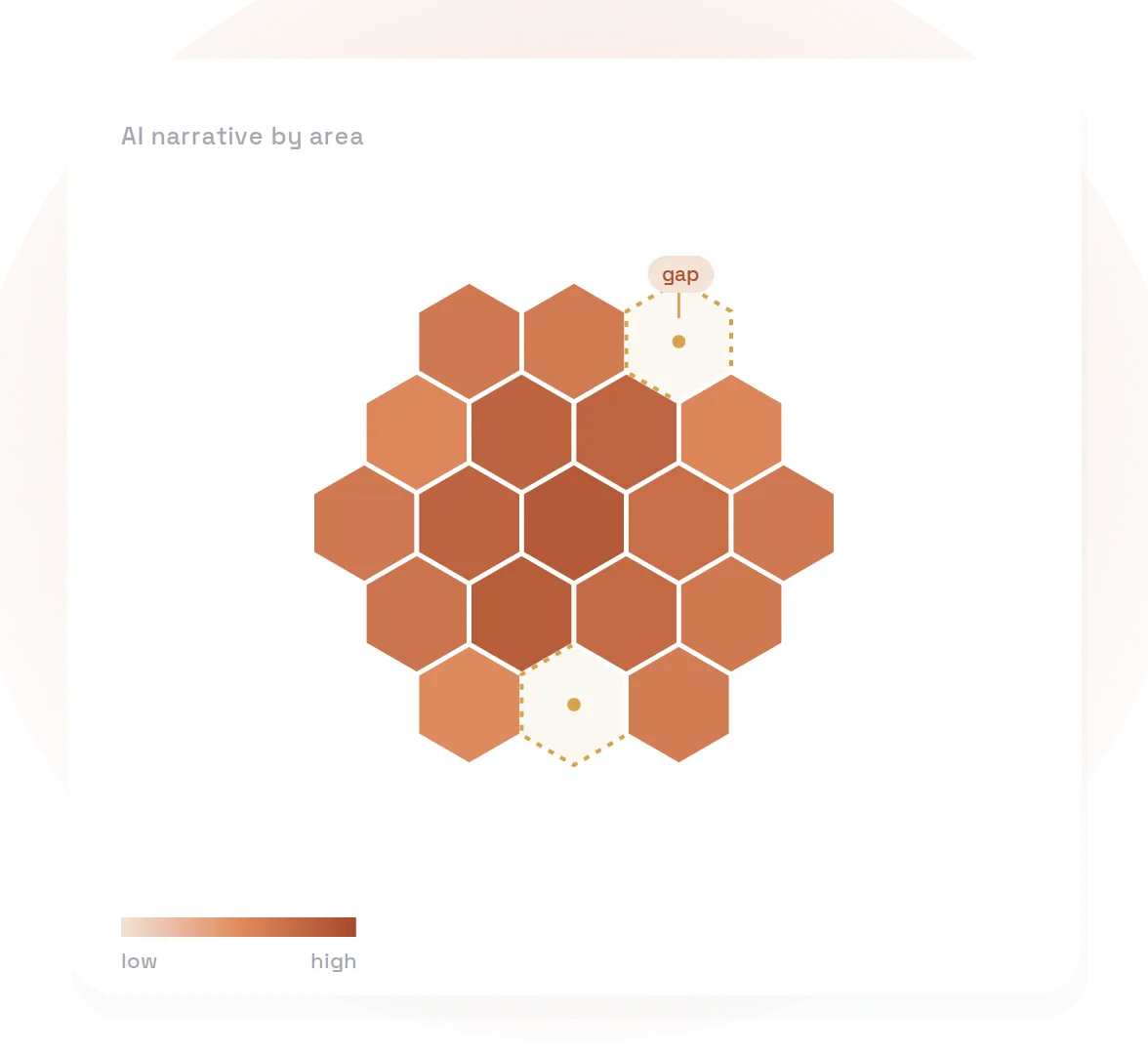
From the regional capital to the single village, from food and wine tours to outdoor experiences, we map how AI describes every part of your destination and where the narrative falls short.
Geographic ranking by area, city, and point of interest
Prompt inventory by season and audience
Narrative audit: model sentiment, claims, and gaps
Start with a free AI Audit
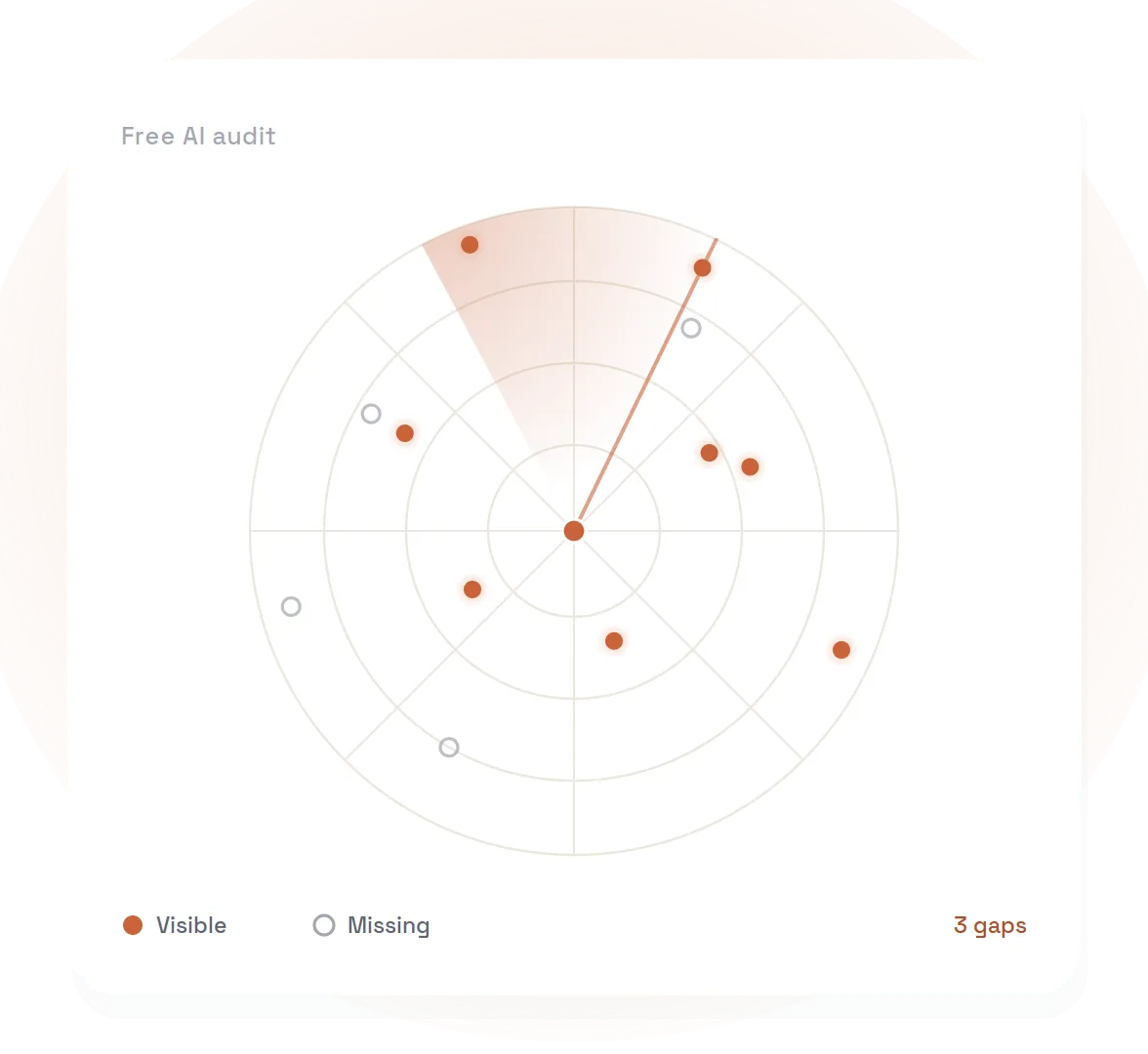
See where you stand before you commit. We test how ChatGPT, Gemini, and Perplexity answer today when travelers ask about your category, your destination, and your competitors.
A full report on where you are visible and where you are missing
The exact prompts losing you bookings right now
No commitment required
For Hotels: Know exactly what AI says about your property
When a traveler asks "What is the best boutique hotel in Florence under 250 euro?", we show you who gets mentioned, by which models, through which talking points, and from which sources.
Rankings on ChatGPT, Claude, Perplexity, Gemini, and AI Overview
Competitor Share of Voice by prompt cluster
Source map: which sites make AI mention your hotel
Start with a free AI Audit
See where you stand before you commit. We test how ChatGPT, Gemini, and Perplexity answer today when travelers ask about your category, your destination, and your competitors.
A full report on where you are visible and where you are missing
The exact prompts losing you bookings right now
No commitment required
For Destinations: Orchestrate the AI narrative of your region
From the regional capital to the single village, from food and wine tours to outdoor experiences, we map how AI describes every part of your destination and where the narrative falls short.
Geographic ranking by area, city, and point of interest
Prompt inventory by season and audience
Narrative audit: model sentiment, claims, and gaps
More Features
Little things that make a difference
The details that move the recommendation

Daily checks
Your prompts run across every major engine every 24 hours, so you catch shifts.

Competitor benchmark
Track up to your full competitive set and see your position change prompt by prompt.

Prompt library
A growing inventory of seasonal, audience, and intent-based travel prompts, ready to use.

Freshness alerts
Get notified when a source goes stale or a model stops mentioning you.

Direct booking focus
Every AI-driven booking arrives high-intent and bypasses OTA commission.
Need Quick Help?
SaaS tools can automatically track and analyze social media metrics, providing insights.
Daily checks
Your prompts run across every major engine every 24 hours, so you catch shifts.
Competitor benchmark
Track up to your full competitive set and see your position change prompt by prompt.
Prompt library
A growing inventory of seasonal, audience, and intent-based travel prompts, ready to use.
Freshness alerts
Get notified when a source goes stale or a model stops mentioning you.
Direct booking focus
Every AI-driven booking arrives high-intent and bypasses OTA commission.
Coverage
Every engine your guests actually use
We track the answers across all the major generative engines, so you see the full picture, not one model's opinion.
FAQ
Frequently Asked Questions
Our service provides comprehensive solutions for everyday needs with dedicated support.
When will I see results?

Most hotels see measurable improvements in AI citations within 30 to 60 days. Full compounding results, where AI platforms consistently recommend you for your highest-value prompts, typically emerge between 90 and 180 days, depending on your starting position and your market.
Can I keep my current agency?
Yes. RankWit works alongside your current team, in-house or agency. We handle the AI visibility layer that traditional partners are not equipped for, and we share everything we do, so your team stays in full control.
How do you track visibility?
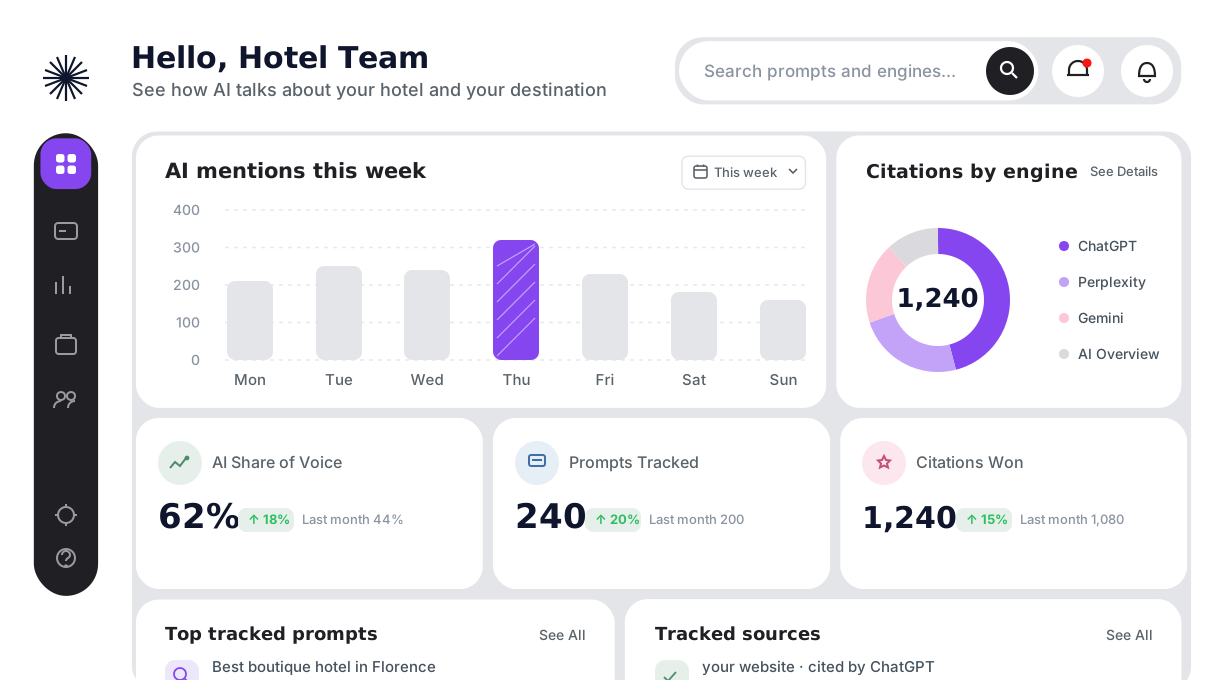
We run your target prompts across every major AI engine, every day, and track exactly where and how you are mentioned. You get a live dashboard with your AI Share of Voice versus competitors, citation trends, and which prompts send you bookings.
Does this drive direct bookings?
Yes, that is the point. Guests who find you through AI recommendations arrive with high intent, ready to book direct. Every AI-driven booking bypasses OTA commission, which is often where this service pays for itself.
What is included in the audit?
We test how ChatGPT, Gemini, Claude, Grok and Perplexity respond today when travelers ask about your destination, your category, and your competitors. You receive a full report on where you are visible, where you are missing, and the specific prompts losing you bookings. No commitment required.
Articles
AI search, explained for travel brands
Practical guides on getting your hotel and your destination cited by ChatGPT, Perplexity, and Gemini.
Start Optimizing
Find out what AI says about your brand
Lead the next wave of travel search. See your current AI visibility and the prompts you are missing, with no commitment.