Three companies published their acquisition numbers over the past year, and they all point the same way: AI search is now a real sign-up channel, and it compounds fast.
Vercel went from 1% to 10% of new sign-ups in six months. Webflow quadrupled its AI-driven registrations. Tally says AI is now its single biggest channel, ahead of Google and social.
This is the trend we built RankWit on, so yes, we have a horse in this race. But the numbers below aren't ours. They come from the companies themselves, sources linked.
AI-driven user acquisition is the share of new users who reach a product through an AI assistant (ChatGPT, Perplexity, Gemini, Google AI Mode) instead of a search results page, an ad, or a social post. The user asks for a recommendation. The model names a product. The click goes straight to sign-up.
Vercel: from 1% to 10% of sign-ups in six months
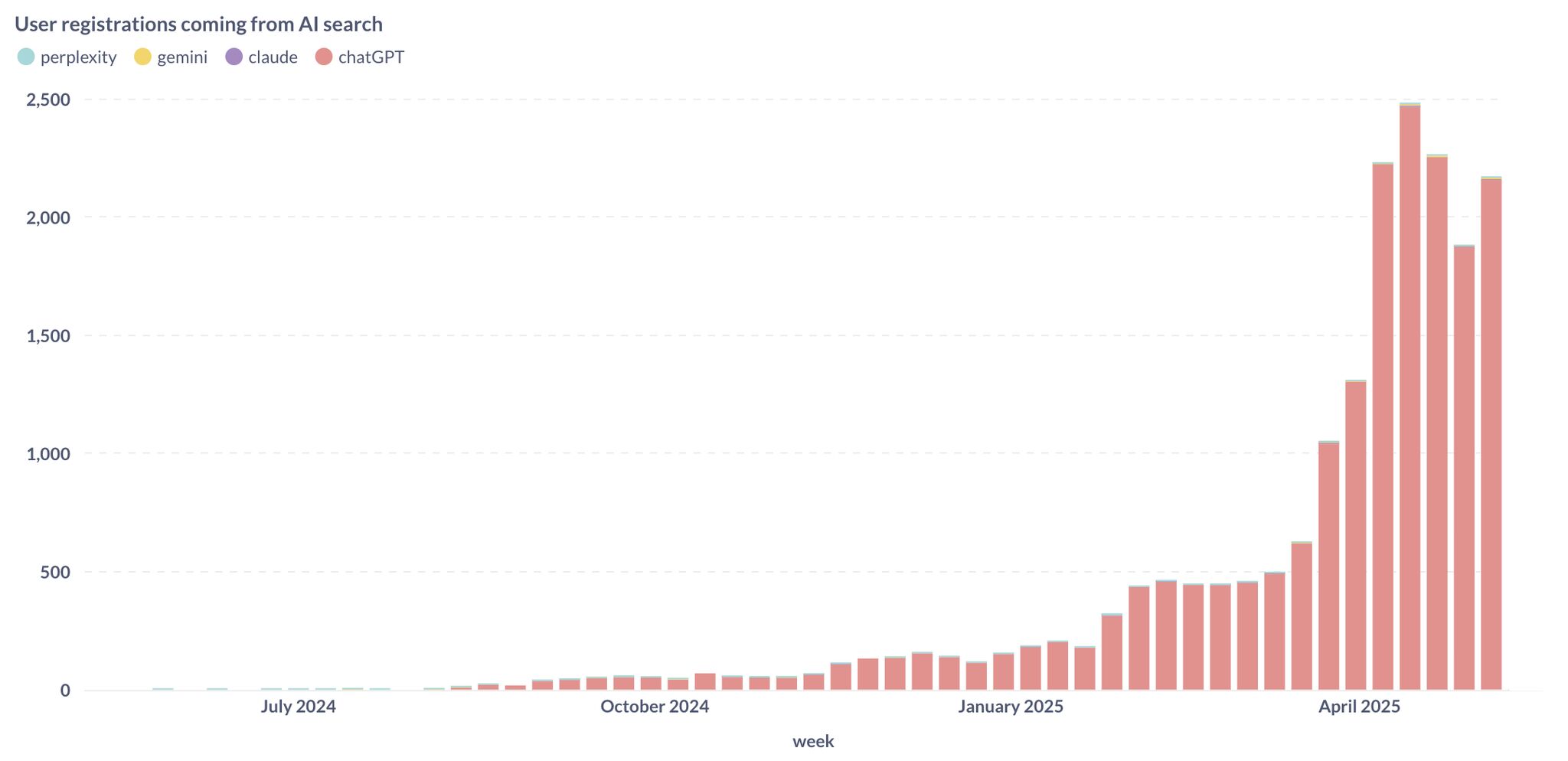
In December 2024, 1% of new Vercel sign-ups came from AI sources like ChatGPT. By May 2025 the figure was 4.8%. One month later it hit 10%.
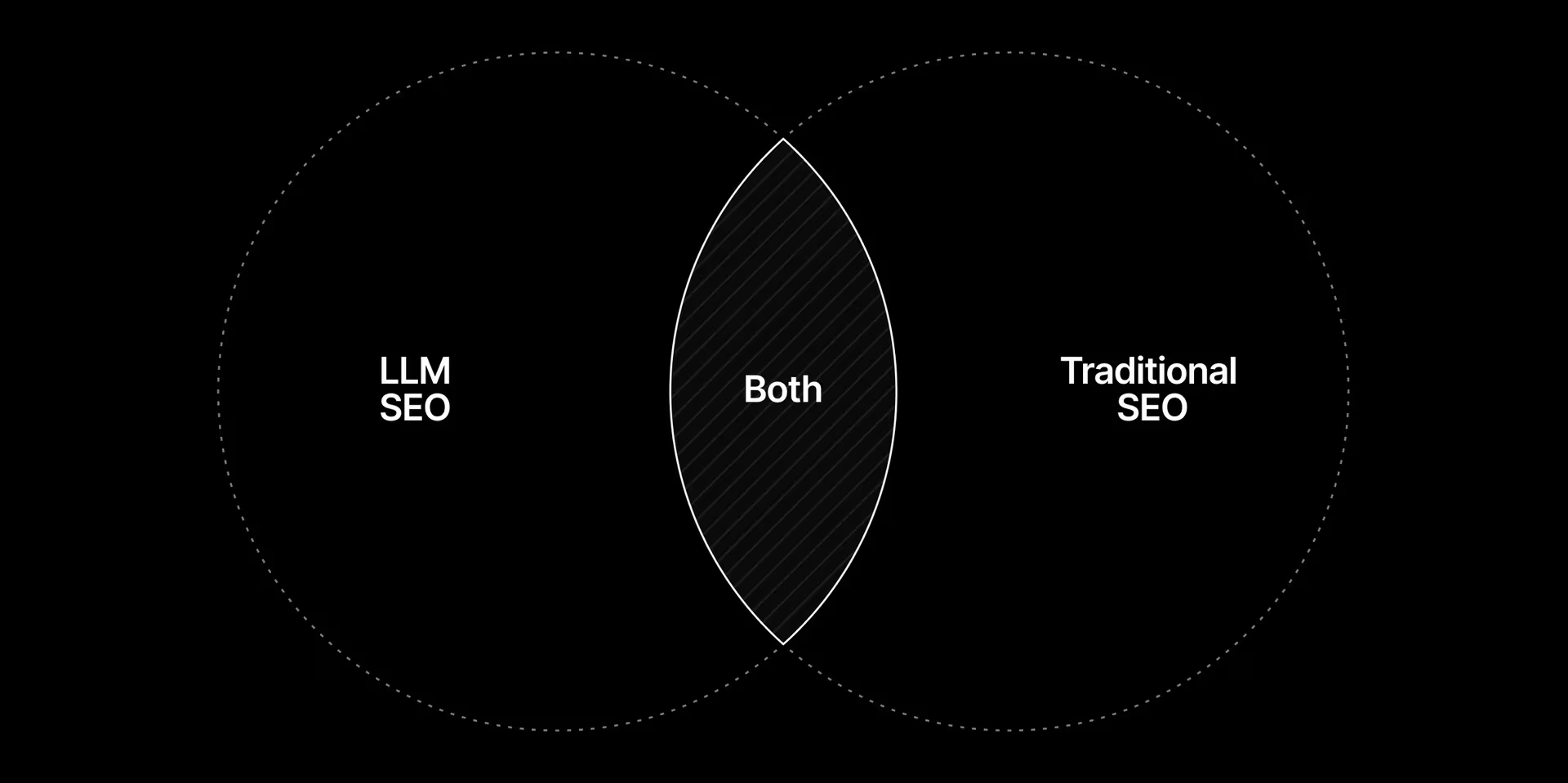
No paid ads behind it, no growth hacks. Vercel's engineering team wrote openly about how they balance traditional SEO with what they call LLM SEO: same content, structured so that models can read it, quote it, and recommend it.
Webflow: AI sign-ups up 4x in nine months
In October 2024, 2% of new Webflow users arrived from AI channels. By June 2025 it was 8%.
Webflow didn't stumble into this. The team ran a deliberate AEO strategy and documented it on their own blog: content restructured around real questions, entities named consistently, answers kept extractable.
Tally: AI is now the number one channel
Tally, the no-code form builder, went further than either. According to co-founder Marie Martens, AI search is now Tally's single biggest acquisition channel, ahead of SEO and social.
"AI search became our biggest acquisition channel. ChatGPT, Perplexity & co are now driving the majority of our new signups." (Marie Martens, co-founder of Tally)
The numbers, side by side
- Vercel: 1% → 10% of new sign-ups, December 2024 → June 2025 (company blog)
- Webflow: 2% → 8% of new sign-ups, October 2024 → June 2025 (company blog)
- Tally: AI now the #1 acquisition channel, reported June 2025 (co-founder)
What did these three do differently?
Vercel treated LLM crawlers as a real audience and adapted its SEO for them. Webflow gave the practice a name internally (AEO) and resourced it like a channel.
Tally has published fewer details. From the outside, the pattern looks like clean documentation, a generous free plan, and a product people actually recommend, which is what models pick up on. We can't verify more than that, so we won't claim more.
What they share: none of them bought this traffic. They made themselves the concrete answer to questions their customers were already asking AI.
Does this apply outside dev tools?
Honest answer: partially. Vercel, Webflow and Tally all sell to builders, an audience that adopted AI assistants early. Your share will differ by industry.
The direction, though, is consistent across every sector we track. LLM-powered search is growing everywhere; the only variable is speed. We covered the broader data in The Rapid Rise of LLM-Powered Search.
How to find out where you stand
- Ask the engines. Run 20 or 30 prompt variations of "best [your category]" across ChatGPT, Perplexity and Gemini. Note who gets named. This is the manual version of what RankWit automates.
- Fix access and structure. Make sure your robots.txt allows search bots like OAI-SearchBot, add an llms.txt file, and structure key pages as direct answers.
- Track it monthly. Citations shift with every model update. A one-off check tells you where you were, not where you are.
FAQ
Is AI search replacing Google?
No. It's stacking on top of it. Even at Vercel's 10%, the other 90% of sign-ups still come from traditional channels. What matters is the slope: this channel grew 10x in six months while the others stayed flat.
How do I measure AI-driven sign-ups for my own product?
Combine referral data (traffic from chatgpt.com and perplexity.ai) with a free-text "how did you hear about us" field at sign-up. Vercel and Webflow both use this mix. Neither signal is complete on its own; together they're reliable enough to act on.
Do I need to rewrite my whole site?
Usually no. Start with the pages that answer buying questions: comparisons, pricing, use cases. Those are the pages models quote. See our breakdown of Agentic Engine Optimization for what to fix first.
How long before results show?
Vercel's curve took six months, and they started with strong domain authority. Expect slower movement for smaller sites. We think anyone promising AI citations in two weeks is guessing.
Vercel, Webflow and Tally didn't wait for the shift to finish before acting on it. If you want to know what ChatGPT says about your product today, RankWit runs that check for you.