📚 Learn, Apply, Win
Explore articles designed to spark ideas, share knowledge, and keep you updated on what’s new.
LLMs enable search engines to process complex questions, identify relationships between topics, and provide more detailed responses. This technology is helping search platforms move toward more conversational and intelligent search experiences.
GEO requires a shift in strategy from traditional SEO. Instead of focusing solely on how search engines crawl and rank pages, Generative Engine Optimization (GEO) focuses on how Large Language Models (LLMs) like ChatGPT, Gemini, or Claude understand, retrieve, and reproduce information in their answers.
To make this easier to implement, we can apply the three classic pillars of SEO—Semantic, Technical, and Authority/Links—reinterpreted through the lens of GEO.
This refers to the language, structure, and clarity of the content itself—what you write and how you write it.
🧠 GEO Tactics:
🔍 Compared to Traditional SEO:
This pillar deals with how your content is coded, delivered, and accessed—not just by humans, but by AI models too.
⚙️ GEO Tactics:
🔍 Compared to Traditional SEO:
This refers to the signals of trust that tell a model—or a search engine—that your content is reliable.
🔗 GEO Tactics:
🔍 Compared to Traditional SEO:
AI governance in search engines refers to the rules, policies, and practices that ensure artificial intelligence systems operate in a fair, transparent, safe, and responsible way. It includes managing data use, reducing bias, protecting user privacy, and making sure search results are accurate and trustworthy.
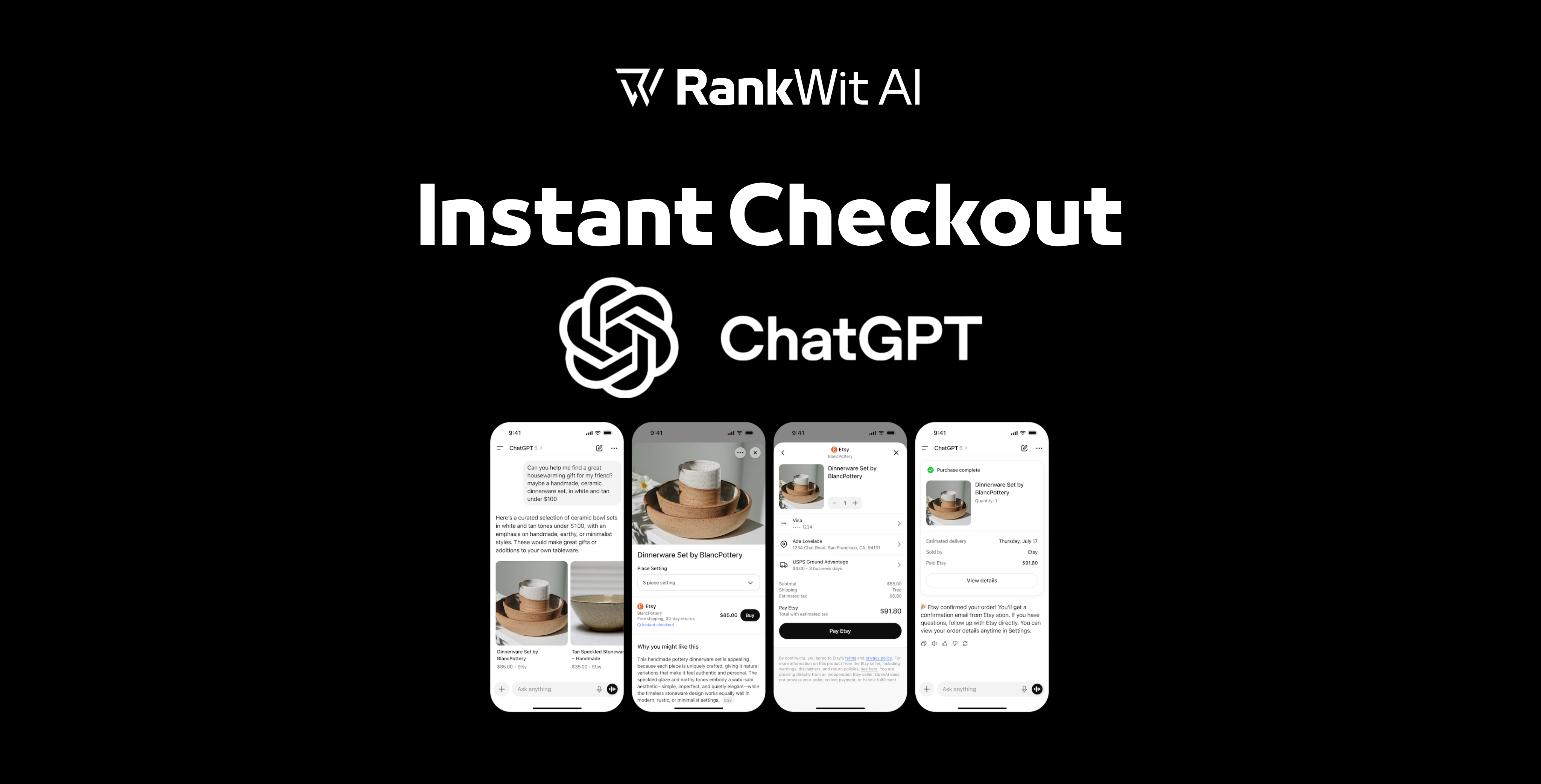
As of now, ChatGPT Instant Checkout is available only for merchants operating in the United States.
If your online store runs on Shopify or Etsy, you can already take advantage of this feature without any additional implementation, since these platforms are directly supported by OpenAI’s infrastructure.
For custom-built or enterprise e-commerce systems, a dedicated integration following the Agentic Commerce Protocol (ACP) is required.
Rankwit can assist your team in developing this integration—allowing you to access the U.S. market immediately and prepare for future international expansion as OpenAI rolls out the program globally.
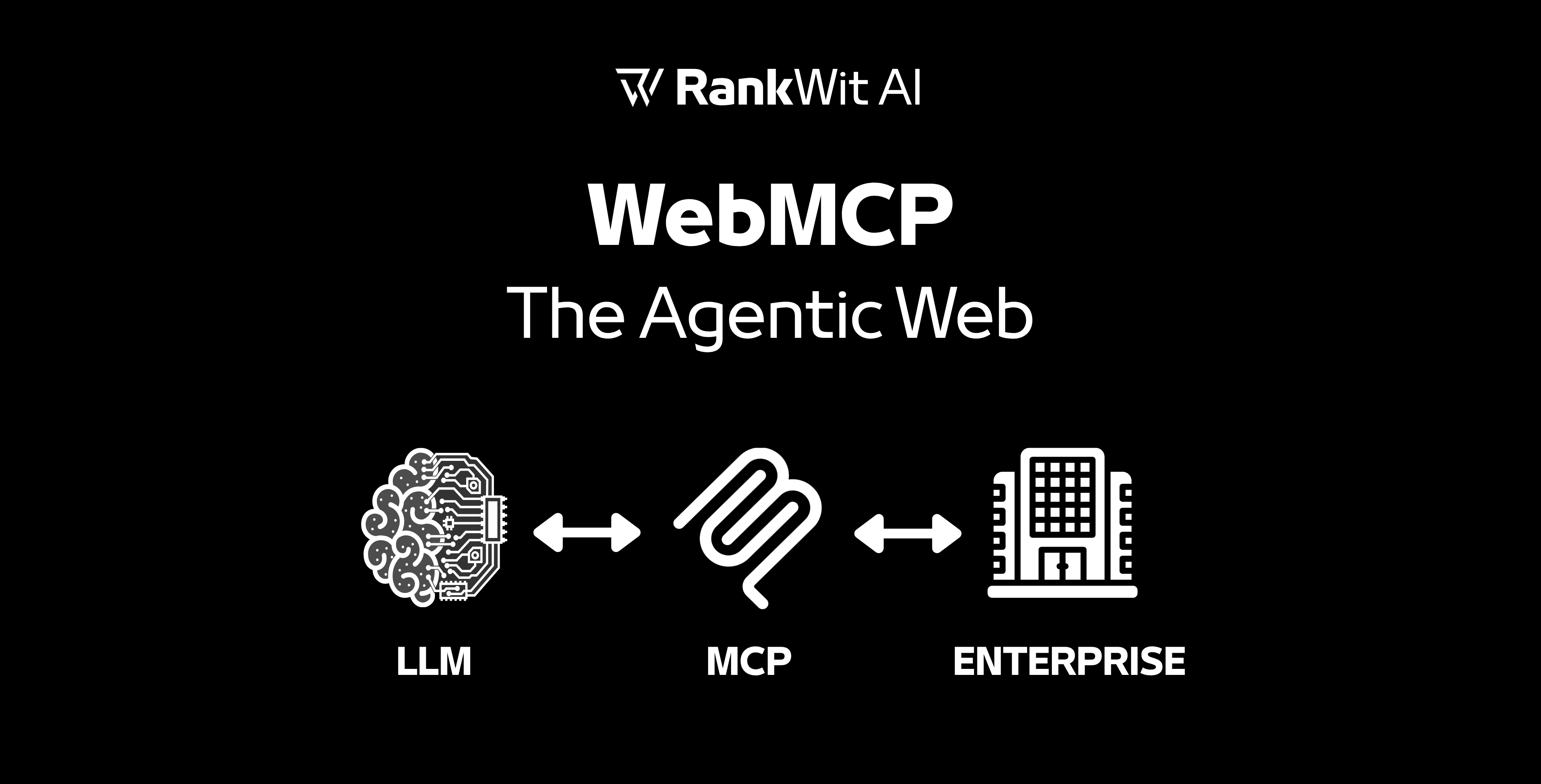
While traditional scraping is fragile and prone to breaking when a website's design changes, WebMCP provides a reliable "handshake" between the site and the AI.
Traditional SEO often focused heavily on keyword targeting and ranking pages in search results. AI-driven search, however, prioritizes context, expertise, and relationships between entities. For B2B companies, this means creating deeper, more authoritative content that AI systems can trust and reference when generating answers.
Security is baked into the protocol's core. Unlike "headless" automation, WebMCP operates within the user’s current browser session:
webmcp-tools suite.