Why is optimizing content for large language models becoming important for modern search visibility?

Many modern search systems and AI assistants rely on large language models to generate responses. Optimizing content for LLMs increases the chances that information will be correctly interpreted and referenced in AI-generated answers.

Last updated at  
April 13, 2026
Other FAQ
What technical elements are most important when optimizing a website for AI-driven search engines?
Arrow

To optimize for AI-driven search, websites need clear technical foundations such as structured data, clean site architecture, fast loading times, and accessible content. These elements help search engines and AI models process and interpret the information more effectively.

Read More
ArrowArrow right blue
What does the term "Agentic Web" mean in the context of WebMCP technology?
Arrow

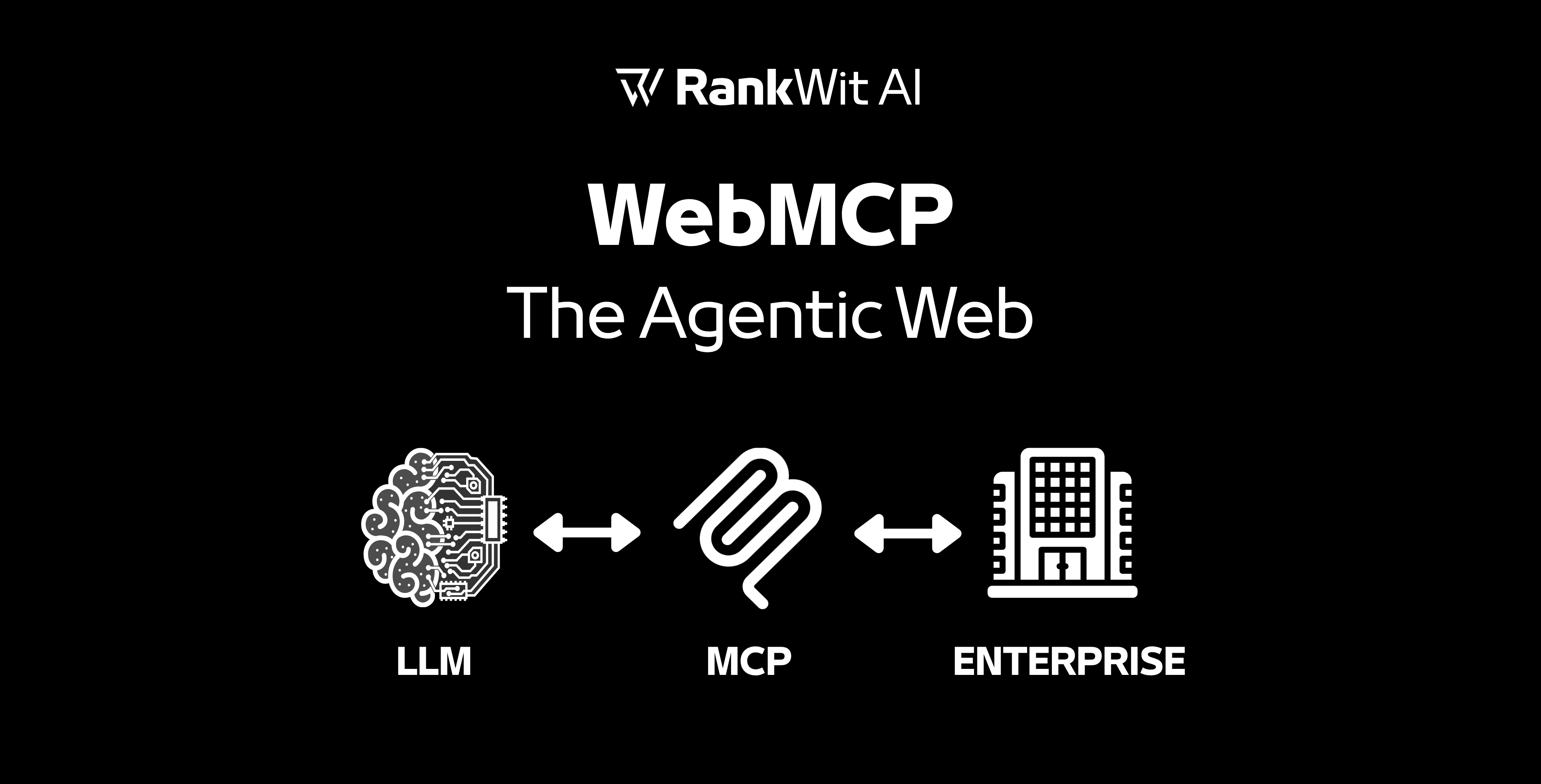
We are moving from a web of pixels to a web of actions.

  • Current Web: Users click, scroll, and read to finish a task.
  • Agentic Web (via WebMCP): A user gives a goal (e.g., "Find and book a flight under $400 for next Tuesday"), and the AI orchestrates the necessary steps across different sites using their exposed WebMCP tools.WebMCP provides the standardized language that allows these agents to navigate different platforms with the same ease a human would, but with the speed of an API.

Read More
ArrowArrow right blue
How often does RankWit update AI visibility data?
Arrow

RankWit refreshes your AI visibility data every 24 hours by default, ensuring you always have an accurate and up-to-date picture of how your brand appears across major AI platforms.

On top of this, depending on your plan:

  • Starter: Daily updates
  • Growth: Daily updates + priority refresh cycles
  • Enterprise: Real-time or custom-scheduled updates, ideal for large teams and high-volume monitoring needs

This update frequency ensures you can quickly spot changes in rankings, sentiment shifts, and competitor activity—allowing your team to respond proactively and maintain strong AI visibility.

Read More
ArrowArrow right blue
How is artificial intelligence transforming the future of search engines and the way users discover information online?
Arrow

Artificial intelligence is transforming search from simple keyword matching to understanding intent, context, and relationships between topics. AI-powered systems can generate answers, summarize information, and connect multiple sources, changing how users discover and interact with content online.

Read More
ArrowArrow right blue
How can businesses integrate artificial intelligence into their SEO strategies to improve search performance and digital visibility?
Arrow

Integrating AI into SEO allows businesses to analyze large datasets, identify search trends, and optimize content more efficiently. AI tools can support keyword research, content optimization, and performance analysis, helping companies improve their search visibility.

Read More
ArrowArrow right blue
What is AI governance in search engines?
Arrow

AI governance in search engines refers to the rules, policies, and practices that ensure artificial intelligence systems operate in a fair, transparent, safe, and responsible way. It includes managing data use, reducing bias, protecting user privacy, and making sure search results are accurate and trustworthy.

Read More
ArrowArrow right blue
Why is AI content optimization becoming essential for businesses that want to stay competitive in search and digital marketing?
Arrow

AI content optimization enables businesses to produce more accurate, targeted, and user-focused content. By leveraging AI insights, companies can adapt their content strategies faster, improve search performance, and meet the evolving requirements of modern search engines.

Read More
ArrowArrow right blue
What are the most common applications of large language models in modern digital platforms and search technologies?
Arrow

Large language models are widely used in applications such as content generation, conversational assistants, search engines, and automated customer support. These systems can understand and generate human language, helping businesses improve communication, automation, and information access.

Read More
ArrowArrow right blue
Why is academic and industry literature important for understanding developments in AI, search technologies, and digital marketing?
Arrow

Academic and industry literature offers valuable research, analysis, and expert perspectives on emerging technologies and digital strategies. Reviewing this literature helps professionals stay informed about innovations, methodologies, and best practices in AI and search optimization.

Read More
ArrowArrow right blue
How is GEO different from SEO?
Arrow

GEO (Generative Engine Optimization) is not a rebrand of SEO—it’s a response to an entirely new environment. SEO optimizes for bots that crawl, index, and rank. GEO optimizes for large language models (LLMs) that read, learn, and generate human-like answers.

While SEO is built around keywords and backlinks, GEO is about semantic clarity, contextual authority, and conversational structuring. You're not trying to please an algorithm—you’re helping an AI understand and echo your ideas accurately in its responses. It's not just about being found—it's about being spoken for.

Read More
ArrowArrow right blue