📚 Learn, Apply, Win
Explore articles designed to spark ideas, share knowledge, and keep you updated on what’s new.
AI search optimization involves structuring and optimizing content so artificial intelligence systems can interpret, analyze, and reference it effectively. This includes focusing on semantic relevance, clear content structure, entity signals, and authoritative information.
The transformer is the foundational architecture behind modern LLMs like GPT. Introduced in a groundbreaking 2017 research paper, transformers revolutionized natural language processing by allowing models to consider the entire context of a sentence at once, rather than just word-by-word sequences.
The key innovation is the attention mechanism, which helps the model decide which words in a sentence are most relevant to each other, essentially mimicking how humans pay attention to specific details in a conversation.
Transformers make it possible for LLMs to generate more coherent, context-aware, and accurate responses.
This is why they're at the heart of most state-of-the-art language models today.
RankWit refreshes your AI visibility data every 24 hours by default, ensuring you always have an accurate and up-to-date picture of how your brand appears across major AI platforms.
On top of this, depending on your plan:
This update frequency ensures you can quickly spot changes in rankings, sentiment shifts, and competitor activity—allowing your team to respond proactively and maintain strong AI visibility.
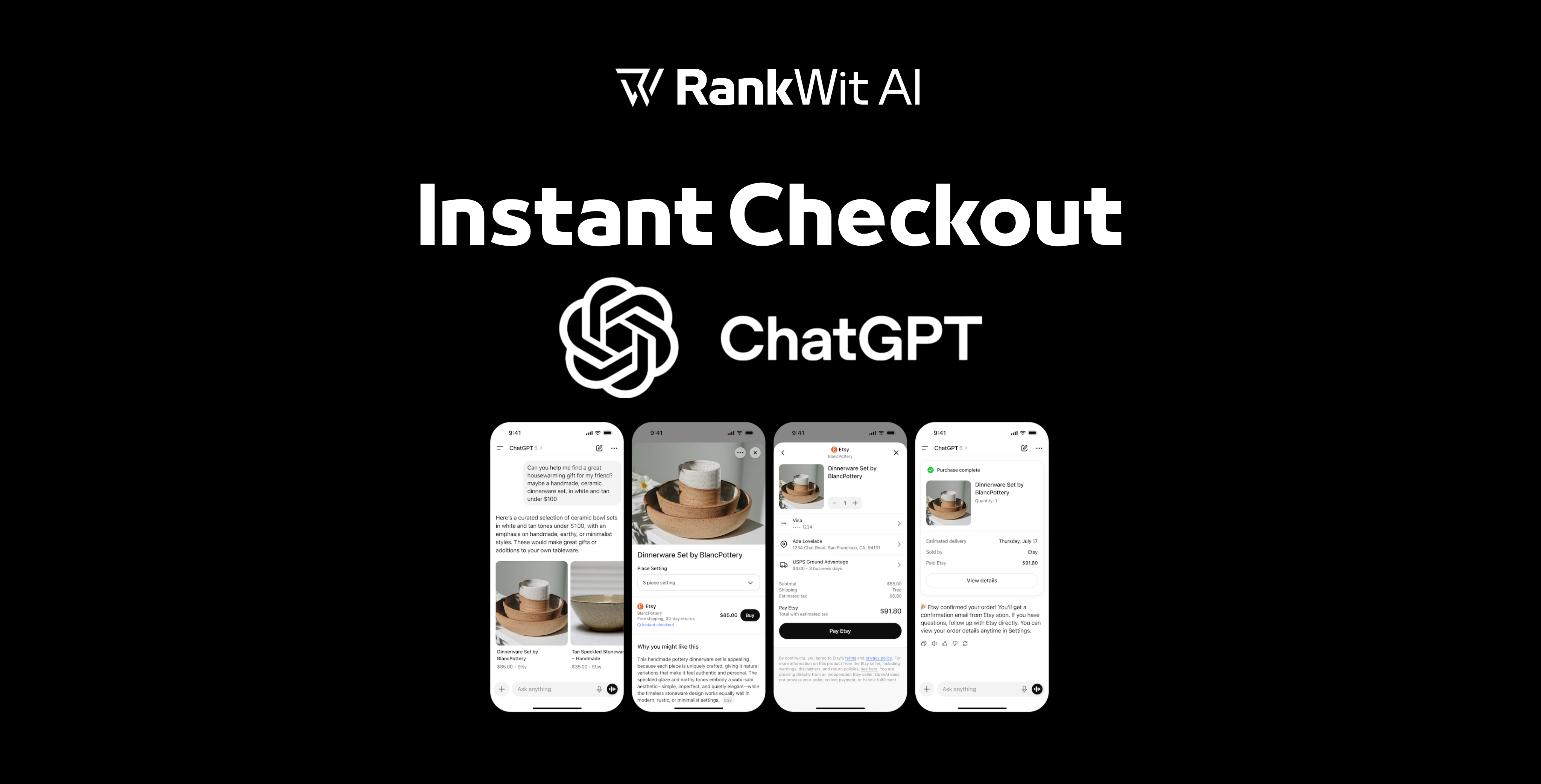
At Rankwit, we specialize in helping merchants take advantage of OpenAI’s Agentic Commerce Protocol (ACP).
Our team manages the entire integration lifecycle, from mapping your product catalog to OpenAI’s structured feed specification, to building the checkout API endpoints and connecting secure payment providers like Stripe.
By partnering with Rankwit, your business can:
We tailor solutions to both enterprise and custom e-commerce platforms, ensuring a scalable and future-ready architecture.
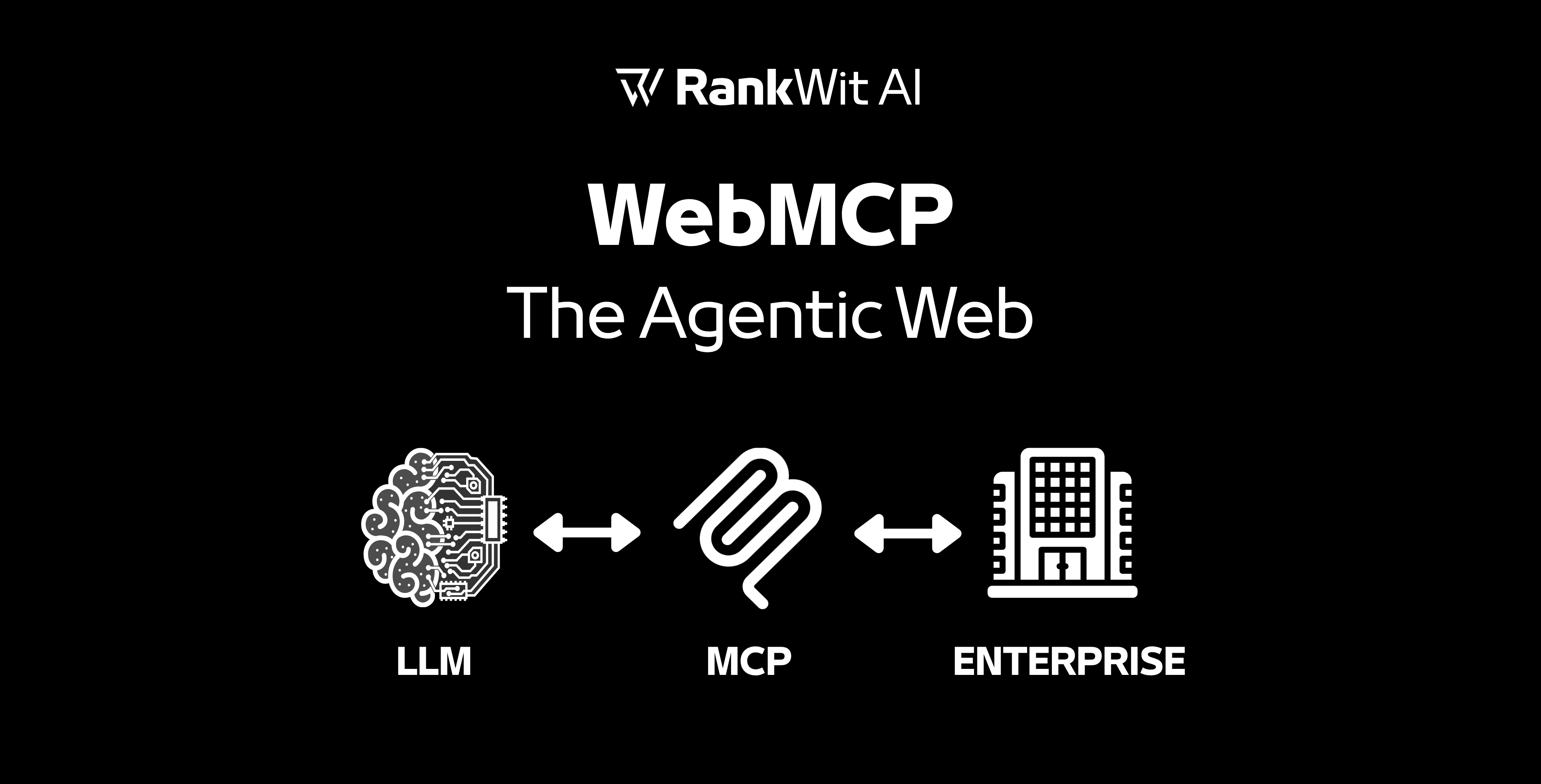
Implementing WebMCP is streamlined through the Google Chrome Labs toolkit. Developers have two primary paths:
toolname and tooldescription attributes to existing HTML <form> tags.navigator.modelContext.registerTool() API to expose complex JavaScript functions as callable AI tools.This flexibility allows teams to start with basic functionality and scale to complex integrations without a total architecture overhaul.