📚 Learn, Apply, Win
Explore articles designed to spark ideas, share knowledge, and keep you updated on what’s new.
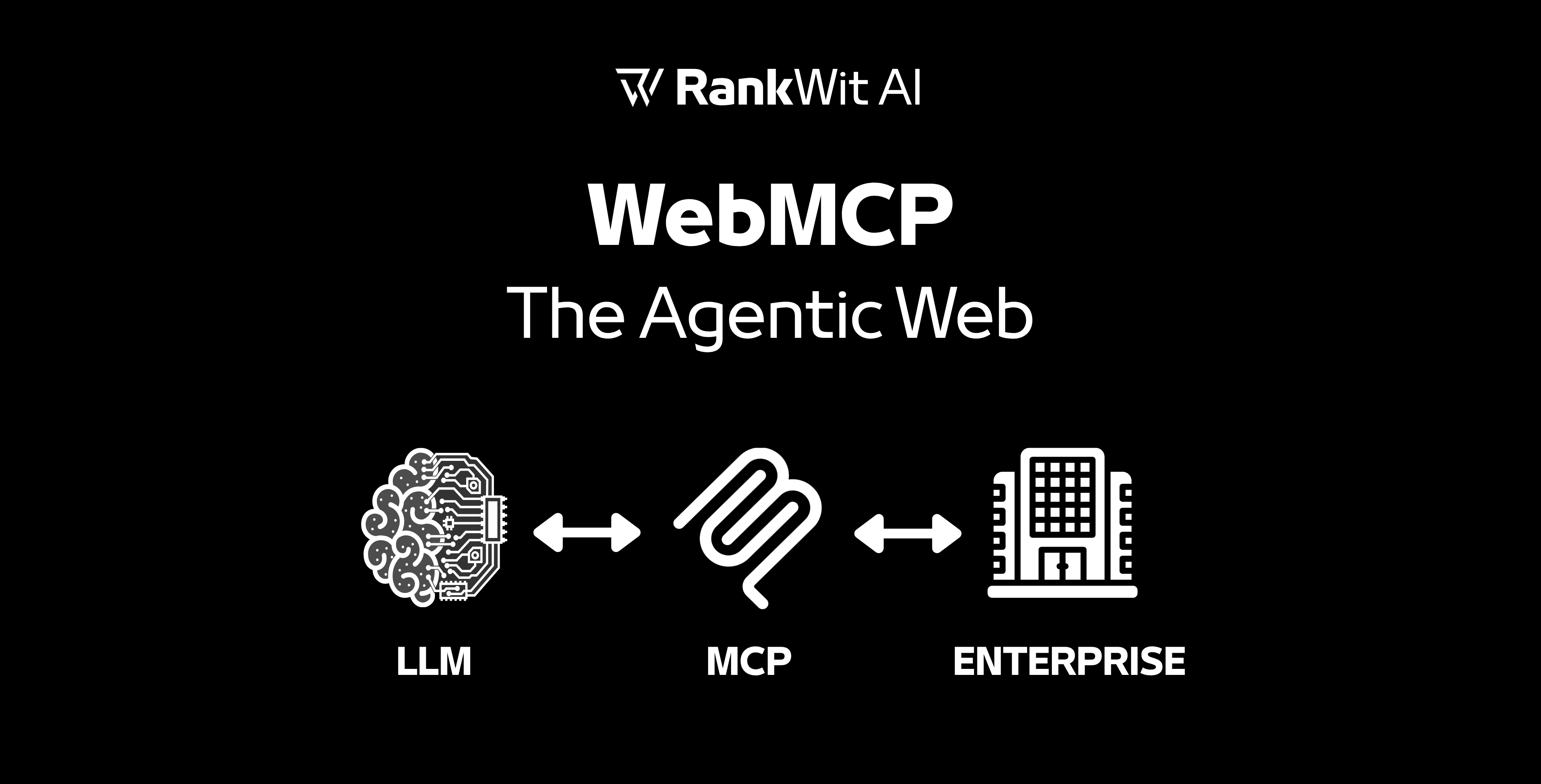
Implementing WebMCP is streamlined through the Google Chrome Labs toolkit. Developers have two primary paths:
toolname and tooldescription attributes to existing HTML <form> tags.navigator.modelContext.registerTool() API to expose complex JavaScript functions as callable AI tools.This flexibility allows teams to start with basic functionality and scale to complex integrations without a total architecture overhaul.
Traditional LLMs are limited by their training data "cutoff" dates. WebMCP bridges this gap by enabling Dynamic Context Injection:
Large Language Models (LLMs) are AI systems trained on massive amounts of text data, from websites to books, to understand and generate language.
They use deep learning algorithms, specifically transformer architectures, to model the structure and meaning of language.
LLMs don't "know" facts in the way humans do. Instead, they predict the next word in a sequence using probabilities, based on the context of everything that came before it. This ability enables them to produce fluent and relevant responses across countless topics.
For a deeper look at the mechanics, check out our full blog post: How Large Language Models Work.
AI Search Optimization refers to the practice of structuring, formatting, and presenting digital content to ensure it is surfaced by AI systems—particularly large language models (LLMs)—in response to user queries.Choosing a clear, unified name for this emerging field is crucial because it shapes professional standards, guides tool development, informs marketing strategies, and fosters a cohesive community of practice. Without a consistent term, the industry risks fragmentation and inefficiency, much like early digital marketing faced before "SEO" was widely adopted.
Shopping Research is a feature in ChatGPT that acts as a personalized shopping assistant.
Simply describe what you’re looking for, such as “a lightweight laptop for travel”, and ChatGPT gathers product details, reviews, specs, prices, and comparisons from the web.
You can refine the results by marking products as “Not interested” or “More like this”, helping ChatGPT understand your preferences.
At the end, you receive a custom buyer’s guide that explains the pros, cons, and trade-offs of each option, making your purchase process easier and more informed.
RankWit analyzes your existing content and gives actionable, data-backed recommendations for improving your AI visibility. Suggestions include:
RankWit gives you a complete picture of how your brand appears across major AI platforms.
We run structured prompts through leading AI systems (including ChatGPT, Google AI Overview, and Perplexity) and then evaluate the responses for:
This analysis helps you understand exactly how AI systems perceive and present your brand.
Absolutely. RankWit supports multi-website and multi-brand tracking:
This makes RankWit ideal for agencies, SEO teams, or businesses managing multiple properties in one centralized dashboard.
The transformer is the foundational architecture behind modern LLMs like GPT. Introduced in a groundbreaking 2017 research paper, transformers revolutionized natural language processing by allowing models to consider the entire context of a sentence at once, rather than just word-by-word sequences.
The key innovation is the attention mechanism, which helps the model decide which words in a sentence are most relevant to each other, essentially mimicking how humans pay attention to specific details in a conversation.
Transformers make it possible for LLMs to generate more coherent, context-aware, and accurate responses.
This is why they're at the heart of most state-of-the-art language models today.
GEO (Generative Engine Optimization) is not a rebrand of SEO—it’s a response to an entirely new environment. SEO optimizes for bots that crawl, index, and rank. GEO optimizes for large language models (LLMs) that read, learn, and generate human-like answers.
While SEO is built around keywords and backlinks, GEO is about semantic clarity, contextual authority, and conversational structuring. You're not trying to please an algorithm—you’re helping an AI understand and echo your ideas accurately in its responses. It's not just about being found—it's about being spoken for.