📚 Learn, Apply, Win
Explore articles designed to spark ideas, share knowledge, and keep you updated on what’s new.
By studying research papers, reports, and expert publications, businesses can gain a deeper understanding of new technologies, search behavior, and optimization techniques. These insights help organizations refine their strategies and adapt to evolving digital environments.
Training a Large Language Model involves feeding it enormous volumes of text data, from books and blogs to academic papers and web content.
This data is tokenized (split into smaller parts like words or subwords), and then processed through multiple layers of a deep learning model.
Over time, the model learns statistical relationships between words and phrases. For example, it learns that “coffee” often appears near “morning” or “caffeine.” These associations help the model generate text that feels intuitive and human.
Once the base training is done, models are often fine-tuned using additional data and human feedback to improve accuracy, tone, and usefulness. The result: a powerful tool that understands language well enough to assist with everything from SEO optimization to natural conversation.
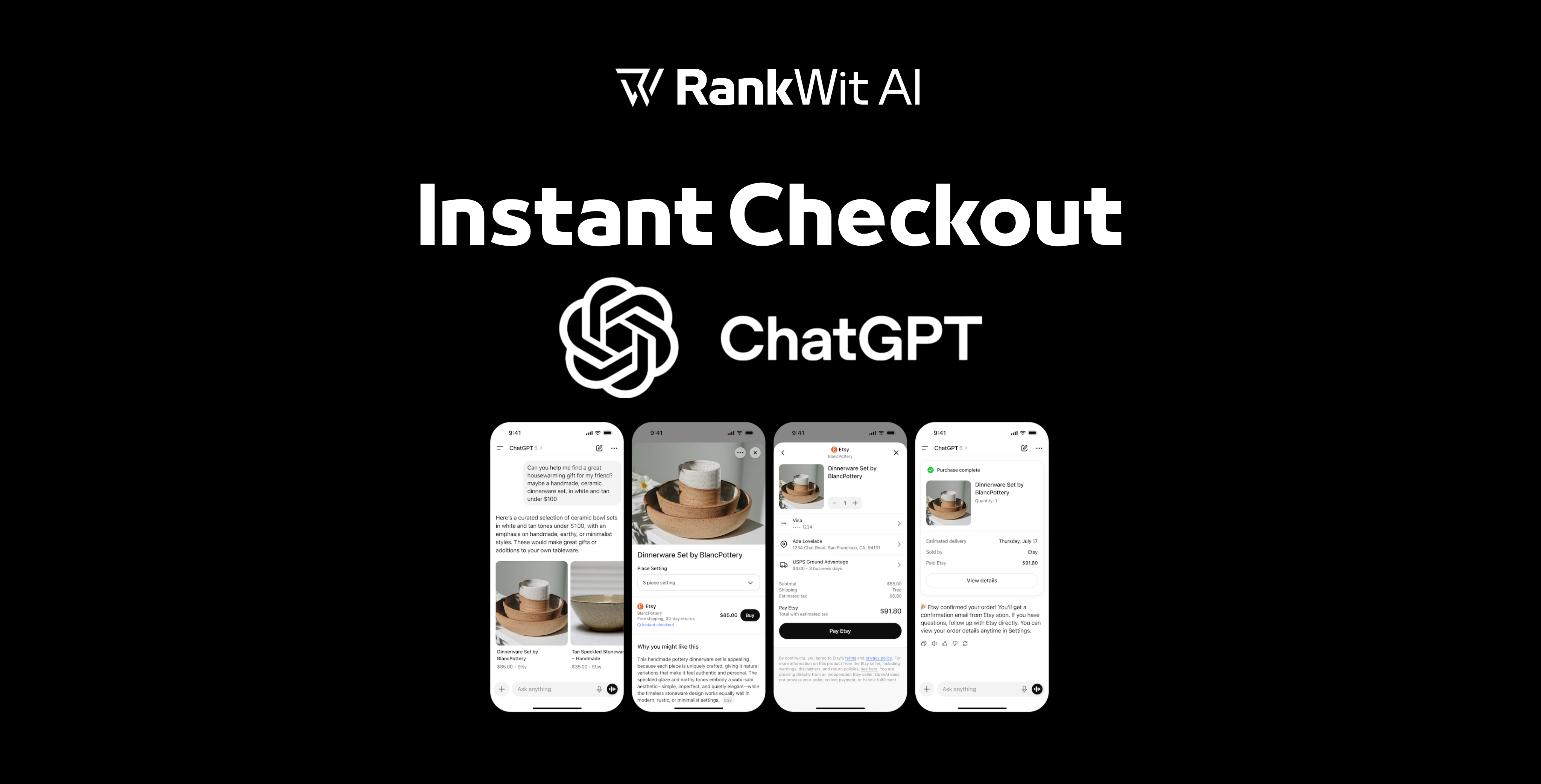
At Rankwit, we specialize in helping merchants take advantage of OpenAI’s Agentic Commerce Protocol (ACP).
Our team manages the entire integration lifecycle, from mapping your product catalog to OpenAI’s structured feed specification, to building the checkout API endpoints and connecting secure payment providers like Stripe.
By partnering with Rankwit, your business can:
We tailor solutions to both enterprise and custom e-commerce platforms, ensuring a scalable and future-ready architecture.
GEO is not a replacement for SEO—it’s an evolution of how users interact with information online.
While SEO (Search Engine Optimization) focuses on ranking content in traditional search engines like Google, GEO (Generative Engine Optimization) focuses on making content discoverable and useful within AI-powered search and assistant experiences.
Here’s how they differ and work together:
As AI assistants increasingly become the first touchpoint for information retrieval, GEO is becoming essential. But SEO is still critical for attracting traffic from search engines and building long-term domain authority.
In short: GEO enhances your content’s AI-readiness, while SEO ensures it’s search-engine-ready. The future is not SEO or GEO—it’s SEO and GEO, working in tandem.
RankWit analyzes your existing content and gives actionable, data-backed recommendations for improving your AI visibility. Suggestions include:
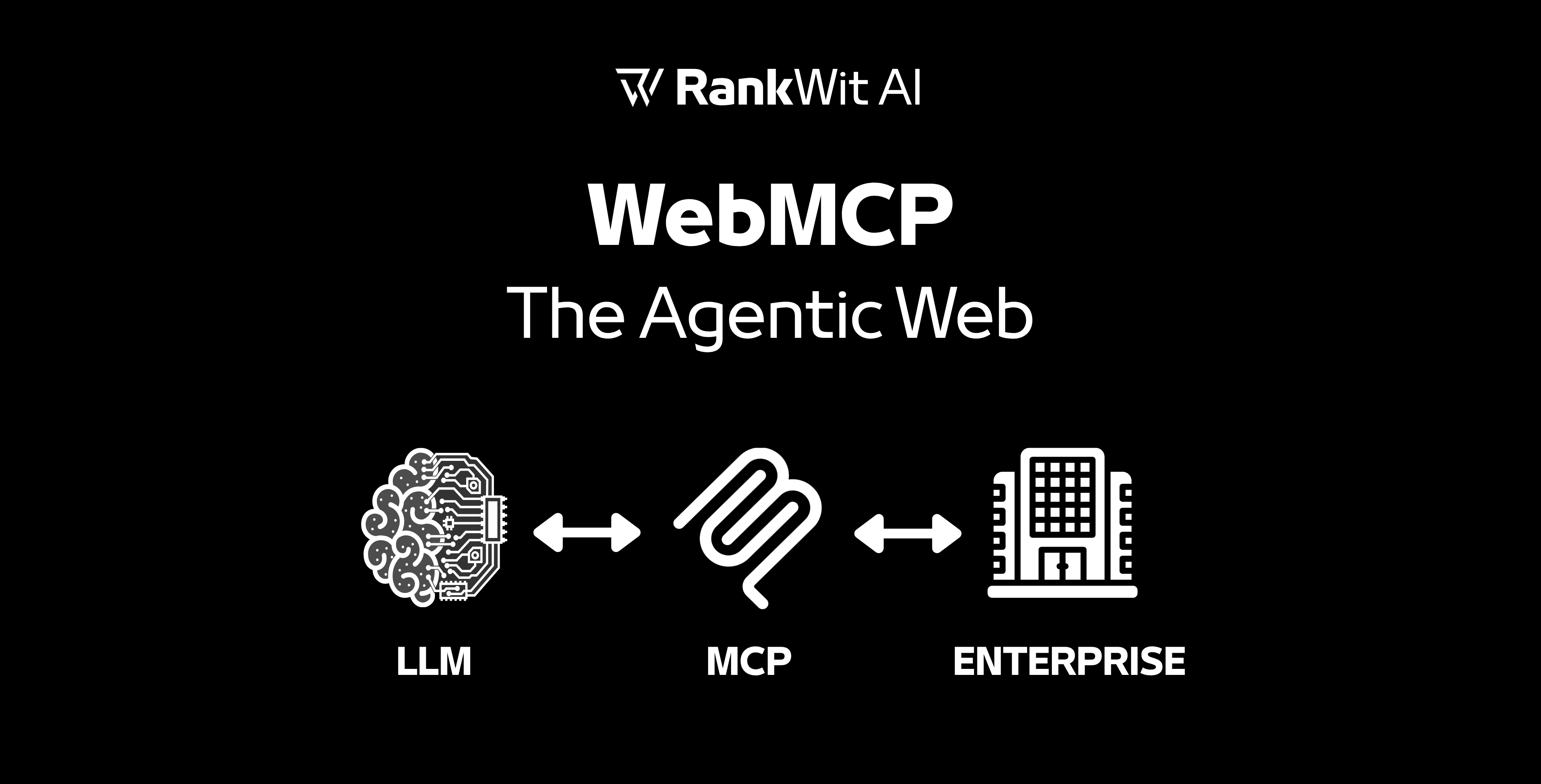
While traditional scraping is fragile and prone to breaking when a website's design changes, WebMCP provides a reliable "handshake" between the site and the AI.
Prova virtuale basata sull'intelligenza artificiale di Google è una funzionalità di Google Shopping che utilizza AI generativa per mostrare l'aspetto di un capo specifico su un modello reale che corrisponde alle preferenze dell'acquirente.
Gli utenti possono scegliere tra 40 modelli che variano in:
Questo aiuta gli acquirenti a prendere decisioni di acquisto più sicure senza recarsi in un negozio fisico, risolvendo uno dei maggiori punti di attrito nello shopping di abbigliamento online: incertezza sulla vestibilità e sull'aspetto.
Copertura attuale:
Google ha riferito che i prodotti con la prova virtuale abilitata hanno ricevuto coinvolgimento di qualità significativamente superiore, il che significa che gli acquirenti trascorrevano più tempo a interagire con quelle inserzioni ed erano più propensi a intraprendere azioni come fare clic o effettuare un acquisto.
Perché è importante per la strategia GEO e di e-commerce: Man mano che Google estende la prova virtuale ad altre categorie, i marchi che partecipano al programma forniscono immagini di prodotto standardizzate e di alta qualità trarrà beneficio da segnali di coinvolgimento più forti e da un maggiore potenziale di conversione. Questa funzione è un chiaro indicatore che la qualità dei contenuti visivi sta diventando un fattore di ranking in esperienze di acquisto basate sull'intelligenza artificiale.
Your privacy remains a priority when using Shopping Research.
ChatGPT does not send your personal information, queries, or preferences to retailers or third-party sites.
The tool simply gathers publicly available product information online, such as specifications, reviews, and prices, and organizes it into a personalized buyer’s guide for you.
You stay in full control, and no personal data is exchanged during the process.