📚 Learn, Apply, Win
Explore articles designed to spark ideas, share knowledge, and keep you updated on what’s new.
We are moving from a web of pixels to a web of actions.
Agentic RAG represents a new paradigm in Retrieval-Augmented Generation (RAG).
While traditional RAG retrieves information to improve the accuracy of model outputs, Agentic RAG goes a step further by integrating autonomous agents that can plan, reason, and act across multi-step workflows.
This approach allows systems to:
In other words, Agentic RAG doesn’t just provide better answers, but it strategically manages the retrieval process to support more accurate, efficient, and explainable decision-making.
RankWit plans are designed to scale with your needs:
If you’re unsure, we can help you select the best plan based on your tracking volume and team size.
Generative Engine Optimization (GEO) is becoming increasingly critical as user behavior shifts toward AI-native search tools like ChatGPT, Gemini, and Perplexity.
According with Bain, recent data shows that over 40% of users now prefer AI-generated answers over traditional search engine results.
This trend reflects a major evolution in how people discover and consume information.
Unlike traditional SEO, which focuses on ranking in static search results, GEO ensures that your content is understandable, relevant, and authoritative enough to be cited or surfaced in LLM-generated responses.
This is especially important as AI platforms begin to integrate live web search capabilities, summaries, and citations directly into their answers.
The urgency is amplified by user traffic trends. According to Similarweb data (see chart below), ChatGPT visits are projected to surpass Google’s by December 2026 if current growth continues.
This suggests that visibility in LLMs may soon be as important—if not more—than traditional search rankings.

Large Language Models (LLMs) are AI systems trained on massive amounts of text data, from websites to books, to understand and generate language.
They use deep learning algorithms, specifically transformer architectures, to model the structure and meaning of language.
LLMs don't "know" facts in the way humans do. Instead, they predict the next word in a sequence using probabilities, based on the context of everything that came before it. This ability enables them to produce fluent and relevant responses across countless topics.
For a deeper look at the mechanics, check out our full blog post: How Large Language Models Work.
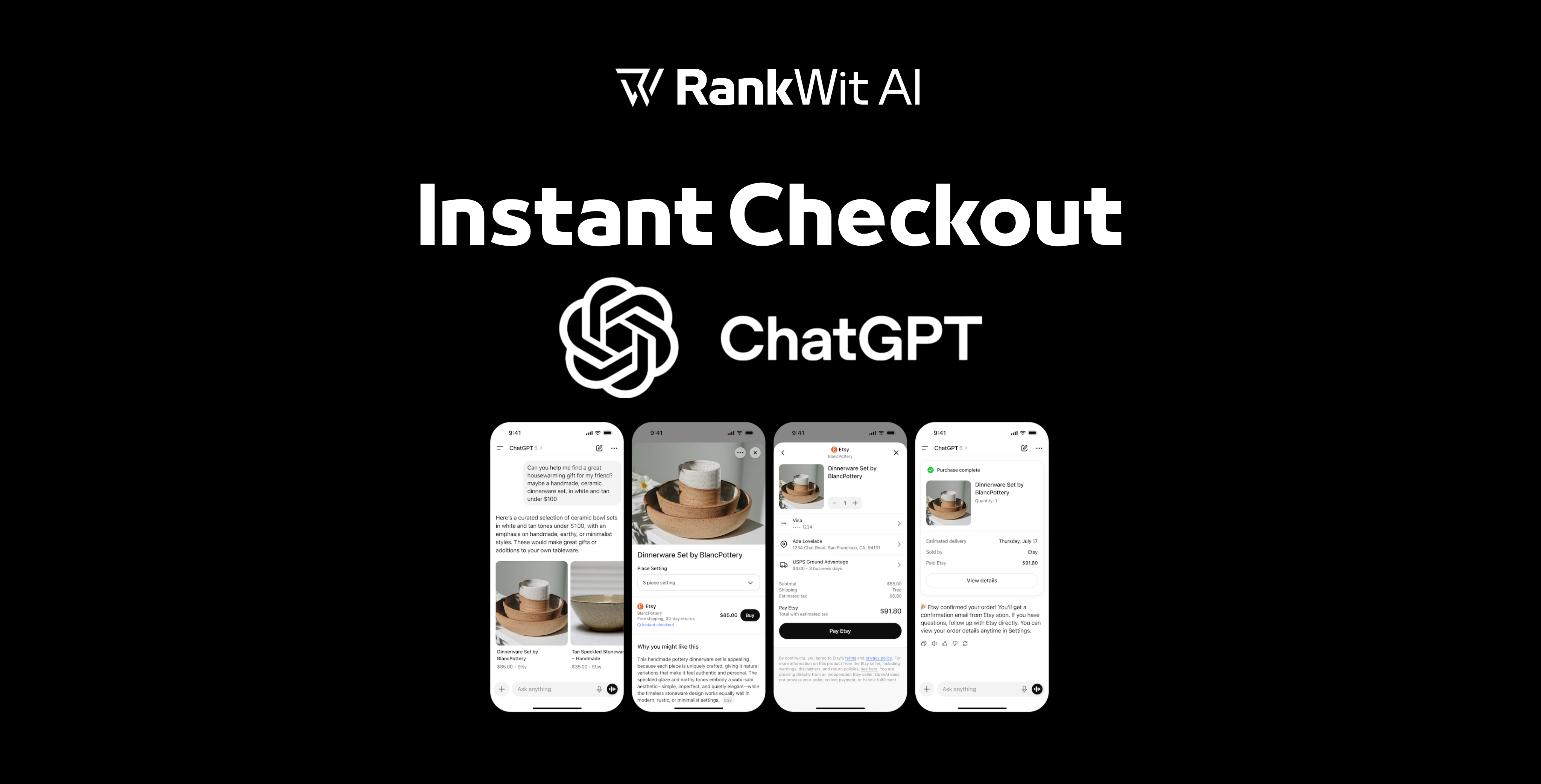
ChatGPT Instant Checkout is a new capability since 2025 developed by OpenAI that allows users to discover, configure, and purchase products directly within ChatGPT without leaving the conversation.
This functionality is powered by the Agentic Commerce Protocol (ACP), an open standard that defines how merchants’ systems interact with AI agents.
Merchants connect their product catalog through a structured product feed, expose checkout endpoints via the Agentic Checkout API, and process payments securely through delegated payment providers like Stripe.
Together, these layers create a smooth, conversational shopping experience that merges AI discovery with secure e-commerce execution.
Generative Engine Optimization (GEO) and Answer Engine Optimization (AEO) are closely related strategies, but they serve different purposes in how content is discovered and used by AI technologies.
llms.txt) to guide how AI systems interpret and prioritize your content.In short:
AEO helps you be the answer in AI search results. GEO helps you be the source that generative AI platforms trust and cite.
Together, these strategies are essential for maximizing visibility in an AI-first search landscape.
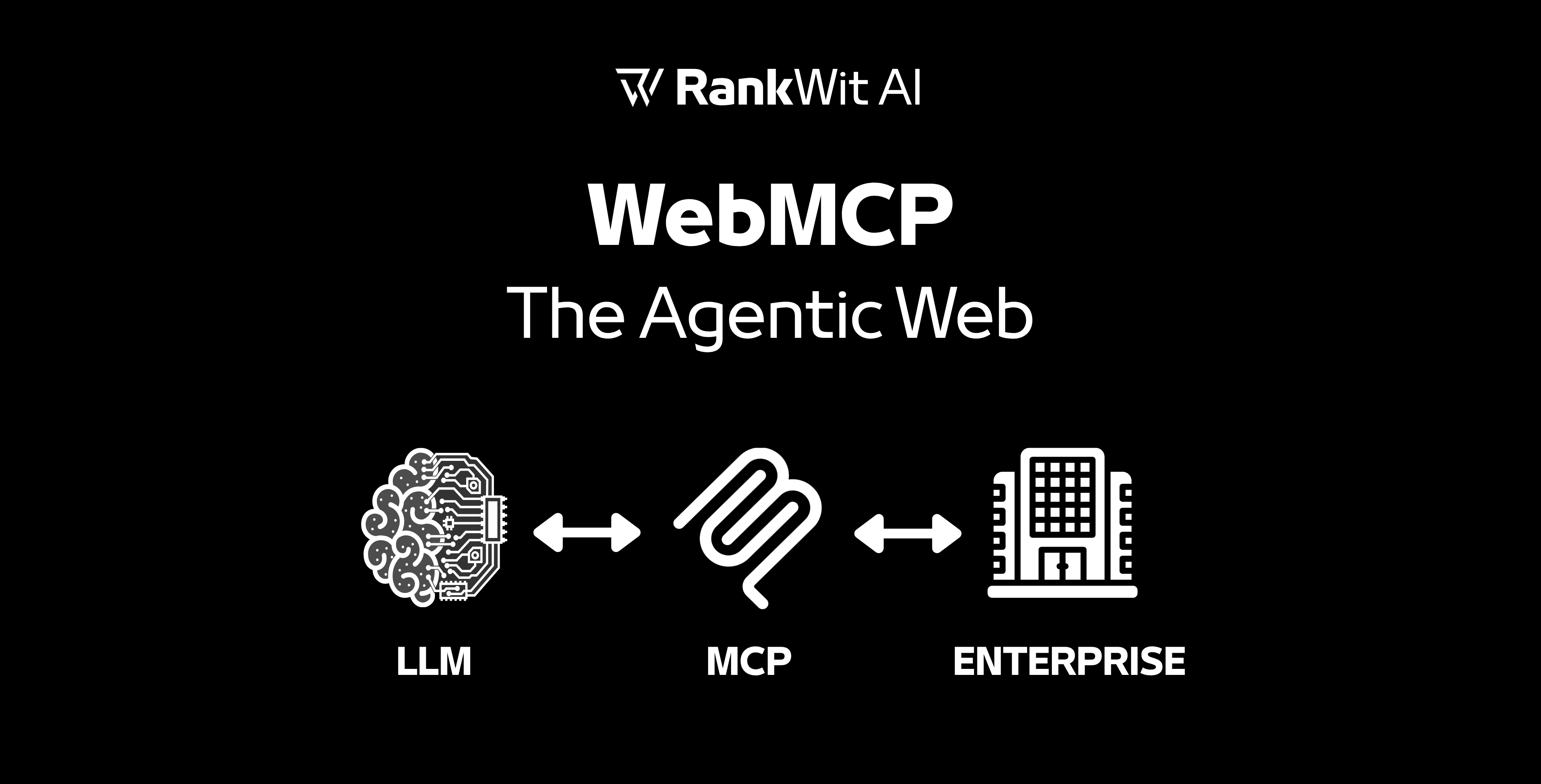
While traditional scraping is fragile and prone to breaking when a website's design changes, WebMCP provides a reliable "handshake" between the site and the AI.
Your privacy remains a priority when using Shopping Research.
ChatGPT does not send your personal information, queries, or preferences to retailers or third-party sites.
The tool simply gathers publicly available product information online, such as specifications, reviews, and prices, and organizes it into a personalized buyer’s guide for you.
You stay in full control, and no personal data is exchanged during the process.
Implementing WebMCP is streamlined through the Google Chrome Labs toolkit. Developers have two primary paths:
toolname and tooldescription attributes to existing HTML <form> tags.navigator.modelContext.registerTool() API to expose complex JavaScript functions as callable AI tools.This flexibility allows teams to start with basic functionality and scale to complex integrations without a total architecture overhaul.