Why are industry case studies important for understanding how AI-driven search and SEO strategies work in real-world scenarios?

Industry case studies provide real-world examples of how SEO, AI search optimization, and digital strategies perform across different sectors. They help businesses understand what works, what challenges may arise, and how similar organizations have improved their search visibility and online performance.

Last updated at  
April 13, 2026
Other FAQ
How are LLMs trained to understand and generate human-like text?
Arrow

Training a Large Language Model involves feeding it enormous volumes of text data, from books and blogs to academic papers and web content.

This data is tokenized (split into smaller parts like words or subwords), and then processed through multiple layers of a deep learning model.

Over time, the model learns statistical relationships between words and phrases. For example, it learns that “coffee” often appears near “morning” or “caffeine.” These associations help the model generate text that feels intuitive and human.

Once the base training is done, models are often fine-tuned using additional data and human feedback to improve accuracy, tone, and usefulness. The result: a powerful tool that understands language well enough to assist with everything from SEO optimization to natural conversation.

Read More
ArrowArrow right blue
How do you measure AI visibility?
Arrow

We run your target prompts across every major AI platform, weekly, and track exactly where and how your hotel is mentioned.

You get a live dashboard showing your AI Share of Voice versus competitors, citation trends, and which prompts are sending you bookings.

Read More
ArrowArrow right blue
What strategies can businesses use to strengthen their authority signals for AI-powered search systems?
Arrow

Businesses can strengthen their AI authority by earning media coverage, publishing expert content, building high-quality backlinks, and maintaining consistent brand mentions across trusted platforms. These signals help AI systems identify the brand as a reliable source within its industry.

Read More
ArrowArrow right blue
How is artificial intelligence transforming the future of search engines and the way users discover information online?
Arrow

Artificial intelligence is transforming search from simple keyword matching to understanding intent, context, and relationships between topics. AI-powered systems can generate answers, summarize information, and connect multiple sources, changing how users discover and interact with content online.

Read More
ArrowArrow right blue
How long before we see results?
Arrow

Most hotels see measurable improvements in AI citations within 30–60 days.
Full compounding results, where AI platforms consistently recommend you for your highest-value prompts, typically emerge between 90 and 180 days, depending on your starting position and market.

Read More
ArrowArrow right blue
How do you monitor and track our visibility across different AI platforms?
Arrow

We run your target traveler prompts across every major AI platform on a weekly basis, tracking exactly where and how your brand or destination is mentioned.

You receive a live dashboard showing: your AI Share of Voice compared to direct competitors; citation trends and brand sentiment; and which specific prompts are driving high-intent traffic to your official channels.

Read More
ArrowArrow right blue
What are the strategic differences between SaaS-based AI platforms and open-source AI models in terms of control, scalability, privacy, customization, and total cost of ownership?
Arrow

We recommend that companies transition toward hybrid solutions. While SaaS AI platforms are ideal for rapid deployment, open-source platforms are recommended for clients who require greater data sovereignty and advanced model training capabilities.

Read More
ArrowArrow right blue
Does ChatGPT share my personal data with retailers when using Shopping Research?
Arrow

Your privacy remains a priority when using Shopping Research.
ChatGPT does not send your personal information, queries, or preferences to retailers or third-party sites.

The tool simply gathers publicly available product information online, such as specifications, reviews, and prices, and organizes it into a personalized buyer’s guide for you.

You stay in full control, and no personal data is exchanged during the process.

Read More
ArrowArrow right blue
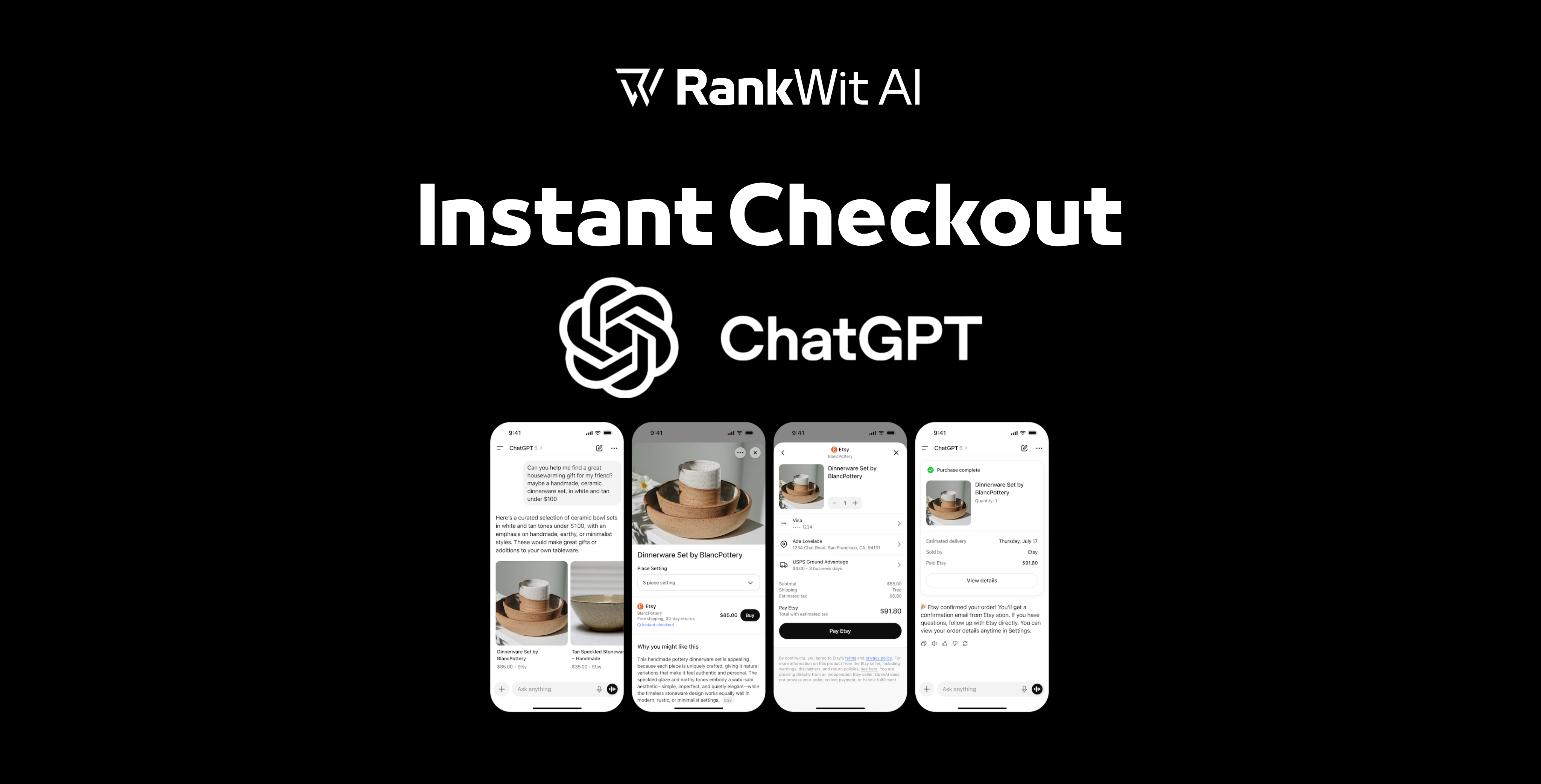
What is ChatGPT Instant Checkout and how does it work for e-commerce merchants?
Arrow

ChatGPT Instant Checkout is a new capability since 2025 developed by OpenAI that allows users to discover, configure, and purchase products directly within ChatGPT without leaving the conversation.
This functionality is powered by the Agentic Commerce Protocol (ACP), an open standard that defines how merchants’ systems interact with AI agents.

Merchants connect their product catalog through a structured product feed, expose checkout endpoints via the Agentic Checkout API, and process payments securely through delegated payment providers like Stripe.
Together, these layers create a smooth, conversational shopping experience that merges AI discovery with secure e-commerce execution.

Read More
ArrowArrow right blue
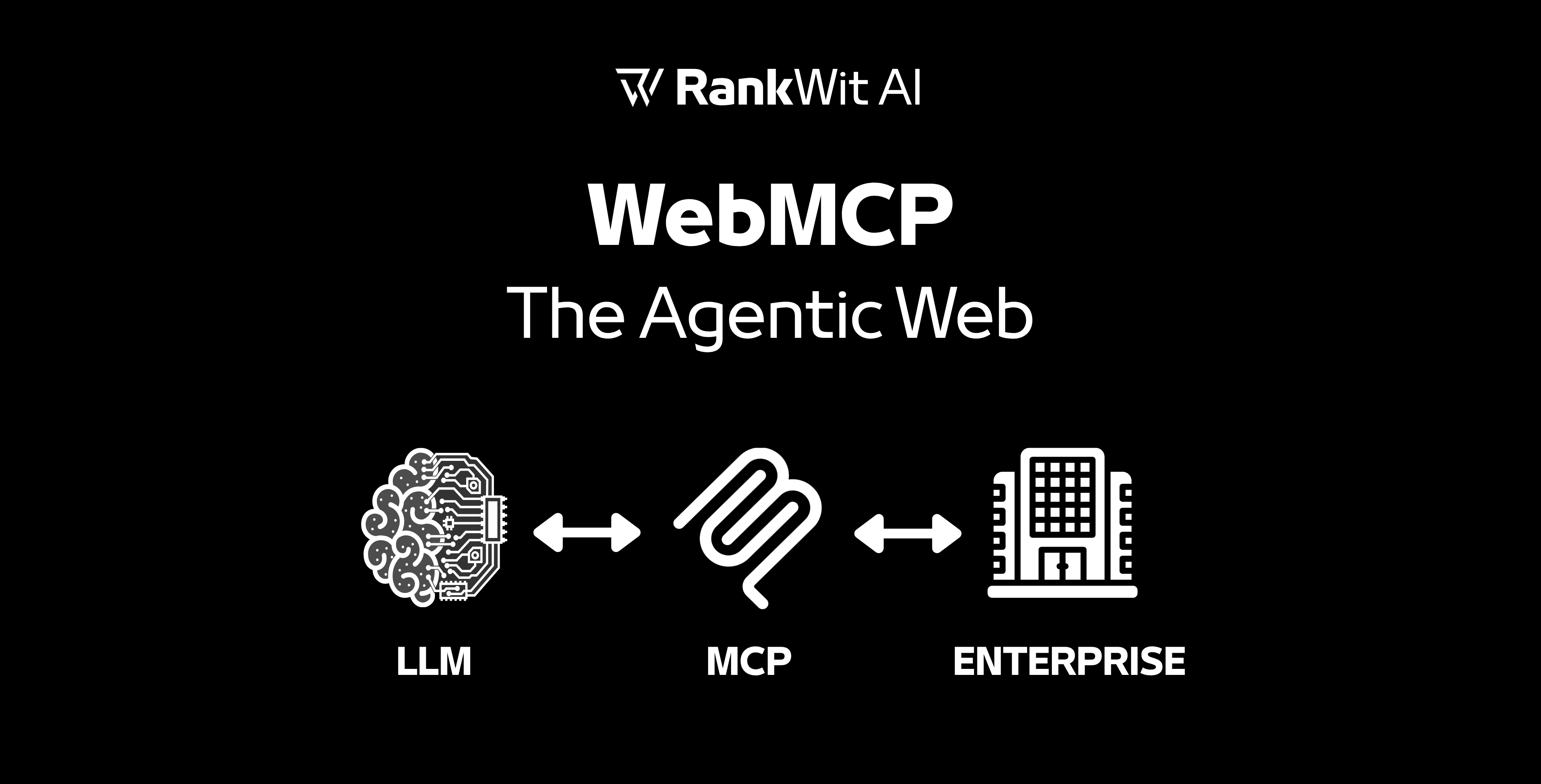
How does WebMCP handle user privacy and prevent AI agents from performing unauthorized actions?
Arrow

Security is baked into the protocol's core. Unlike "headless" automation, WebMCP operates within the user’s current browser session:

  • Consent Gate: The browser acts as a gatekeeper, prompting the user to approve tool calls.
  • Scoped Access: AI agents only see the specific tools the developer has explicitly registered via the webmcp-tools suite.
  • Authentication: It leverages the site's existing login and security protocols, ensuring the AI never bypasses standard safety measures.

Read More
ArrowArrow right blue

📚 Learn, Apply, Win

Stay inspired with the latest stories, tips, and insights.
Explore articles designed to spark ideas, share knowledge, and keep you updated on what’s new.