Why is a well-defined content strategy important for visibility in AI-powered search engines?

A strong content strategy helps establish authority within a specific topic area. When content consistently covers relevant subjects with clear structure and reliable information, AI systems are more likely to recognize the source as trustworthy.

Last updated at  
April 13, 2026
Other FAQ
How is GEO different from SEO?
Arrow

GEO (Generative Engine Optimization) is not a rebrand of SEO—it’s a response to an entirely new environment. SEO optimizes for bots that crawl, index, and rank. GEO optimizes for large language models (LLMs) that read, learn, and generate human-like answers.

While SEO is built around keywords and backlinks, GEO is about semantic clarity, contextual authority, and conversational structuring. You're not trying to please an algorithm—you’re helping an AI understand and echo your ideas accurately in its responses. It's not just about being found—it's about being spoken for.

Read More
ArrowArrow right blue
What criteria should organizations use to evaluate and select the most suitable AI platform for scalability, performance, security, and long-term return on investment?
Arrow

Within our ecosystem, we evaluate AI platforms based on real profitability criteria. We do not simply look for the most popular infrastructure, but for platforms that offer robust APIs, enterprise-grade data security, and native integration with existing systems to ensure immediate return on investment.

Read More
ArrowArrow right blue
What technical elements are most important when optimizing a website for AI-driven search engines?
Arrow

To optimize for AI-driven search, websites need clear technical foundations such as structured data, clean site architecture, fast loading times, and accessible content. These elements help search engines and AI models process and interpret the information more effectively.

Read More
ArrowArrow right blue
What is Google's AI-powered virtual try-on feature for shopping, and which product categories does it support?
Arrow

Google's AI-powered Virtual Try-On is a Google Shopping feature that uses generative AI to show how a specific garment looks on a real model matching the shopper's preferences.

Users can choose from 40 models varying in:

  • Skin tone
  • Body shape
  • Height and size

This helps shoppers make more confident purchase decisions without visiting a physical store, solving one of the biggest friction points in online apparel shopping: uncertainty about fit and appearance.

Current Coverage

  • Women's tops — launched first, with hundreds of supported brands
  • Men's tops — expanded in late 2023, featuring brands like Abercrombie, Banana Republic, J.Crew, and Under Armour

Google reported that products with Virtual Try-On enabled received significantly higher quality engagement, meaning shoppers spent more time interacting with those listings and were more likely to take actions such as clicking through or completing a purchase.

Why This Matters for GEO and E-Commerce Strategy

As Google extends Virtual Try-On to additional categories, brands that participate in the program and provide standardized, high-quality product images will benefit from stronger engagement signals and greater conversion potential. This feature is a clear indicator that visual content quality is becoming a ranking factor in AI-powered shopping experiences.

Read More
ArrowArrow right blue
How does WebMCP handle user privacy and prevent AI agents from performing unauthorized actions?
Arrow

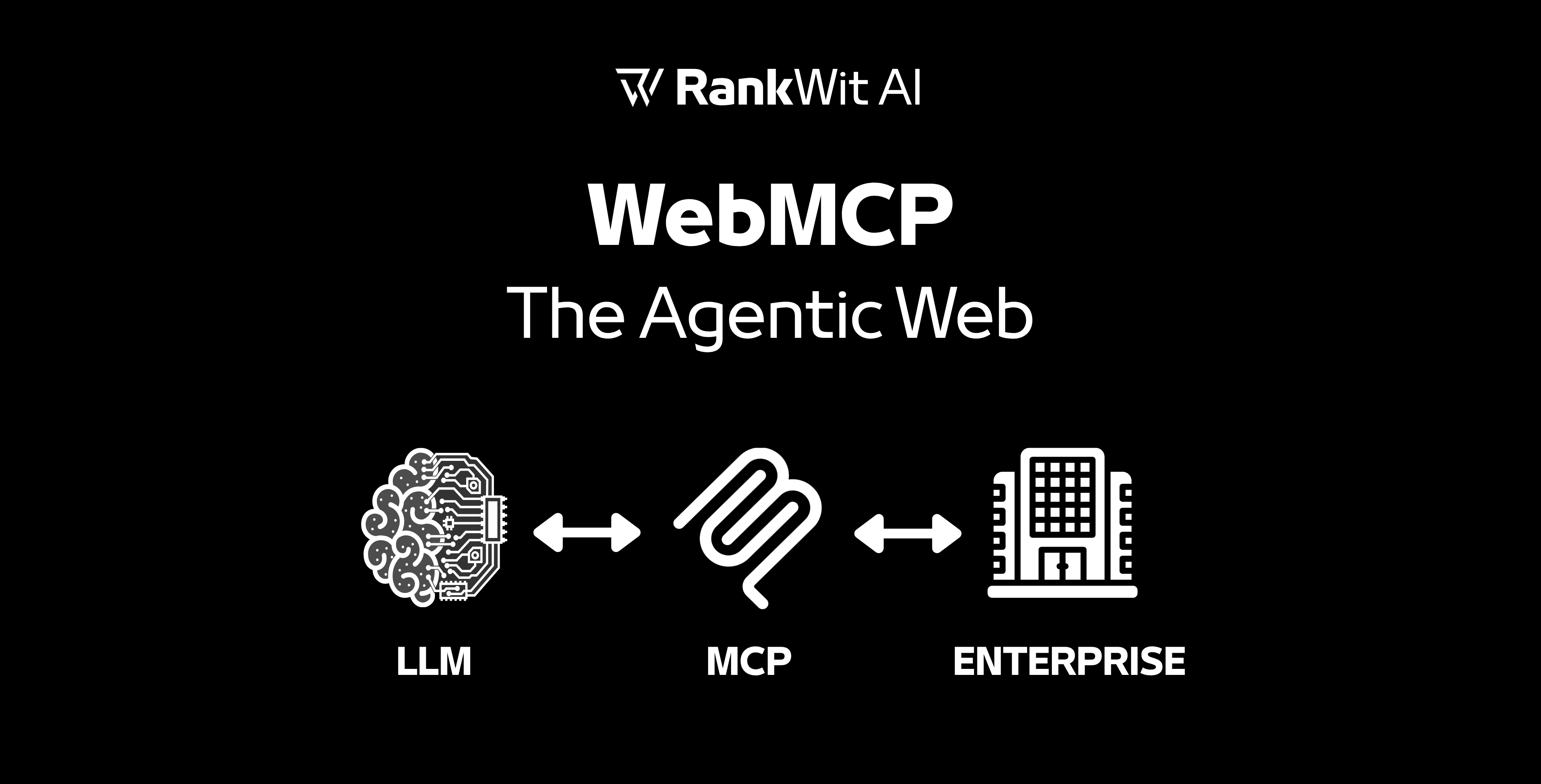
Security is baked into the protocol's core. Unlike "headless" automation, WebMCP operates within the user’s current browser session:

  • Consent Gate: The browser acts as a gatekeeper, prompting the user to approve tool calls.
  • Scoped Access: AI agents only see the specific tools the developer has explicitly registered via the webmcp-tools suite.
  • Authentication: It leverages the site's existing login and security protocols, ensuring the AI never bypasses standard safety measures.

Read More
ArrowArrow right blue
What is a business case and why is it important for evaluating AI and search optimization strategies?
Arrow

A business case outlines the objectives, benefits, costs, and potential outcomes of implementing a specific strategy or technology. In the context of AI and search optimization, it helps organizations understand the expected value, risks, and return on investment before adopting new solutions.

Read More
ArrowArrow right blue
How can websites structure their content so it can be effectively retrieved and used by Retrieval-Augmented Generation systems?
Arrow

Content that is well-structured, informative, and organized around clear topics is easier for retrieval systems to access and use. Structured headings, semantic clarity, and authoritative information increase the chances that content will be retrieved and used by AI systems during response generation.

Read More
ArrowArrow right blue
Why are brand mentions and media coverage important for visibility in AI-driven search environments?
Arrow

AI-powered search systems analyze brand mentions, citations, and references across the web to evaluate credibility. When a brand is consistently mentioned by authoritative sources, it becomes easier for AI systems to recognize its expertise and include it in search results or generated answers.

Read More
ArrowArrow right blue
What’s the difference between GEO and AEO?
Arrow

Generative Engine Optimization (GEO) and Answer Engine Optimization (AEO) are closely related strategies, but they serve different purposes in how content is discovered and used by AI technologies.

  • AEO is focused on helping your content become the direct answer to user queries in AI-powered answer engines like Google's SGE (Search Generative Experience), Bing, or voice assistants. It emphasizes clear formatting, Q&A structure, and schema markup so that AI systems can easily extract and present your content in snippets or spoken responses.
  • GEO, on the other hand, is a broader approach designed to ensure your content is used, synthesized, or cited by generative AI models like ChatGPT, Gemini, Claude, and Perplexity. It involves creating high-quality, authoritative content that large language models (LLMs) recognize as trustworthy and relevant. It may also include using metadata tools (like llms.txt) to guide how AI systems interpret and prioritize your content.
In short:
AEO helps you be the answer in AI search results. GEO helps you be the source that generative AI platforms trust and cite.

Together, these strategies are essential for maximizing visibility in an AI-first search landscape.

Read More
ArrowArrow right blue
How are businesses using large language models to improve digital marketing, content creation, and customer experiences?
Arrow

Companies are integrating large language models into marketing platforms, customer service systems, and content workflows. These tools help generate content, analyze user behavior, and provide personalized communication experiences.

Read More
ArrowArrow right blue