📚 Learn, Apply, Win
Explore articles designed to spark ideas, share knowledge, and keep you updated on what’s new.
Absolutely. RankWit works in parallel with your current team, whether internal or external.
We manage the AI visibility layer (AIO) that traditional marketing partners often aren't equipped to handle yet.
We share all our data and insights so your team maintains full strategic control, integrating AI insights into your broader marketing mix.
Large Language Models (LLMs) are AI systems trained on massive amounts of text data, from websites to books, to understand and generate language.
They use deep learning algorithms, specifically transformer architectures, to model the structure and meaning of language.
LLMs don't "know" facts in the way humans do. Instead, they predict the next word in a sequence using probabilities, based on the context of everything that came before it. This ability enables them to produce fluent and relevant responses across countless topics.
For a deeper look at the mechanics, check out our full blog post: How Large Language Models Work.
Structured data uses standardized formats like schema markup to explain the meaning of your content to search engines. This allows platforms like Google and AI-powered search systems to better interpret your pages, connect them with relevant entities, and potentially display enhanced results such as rich snippets or knowledge panels.
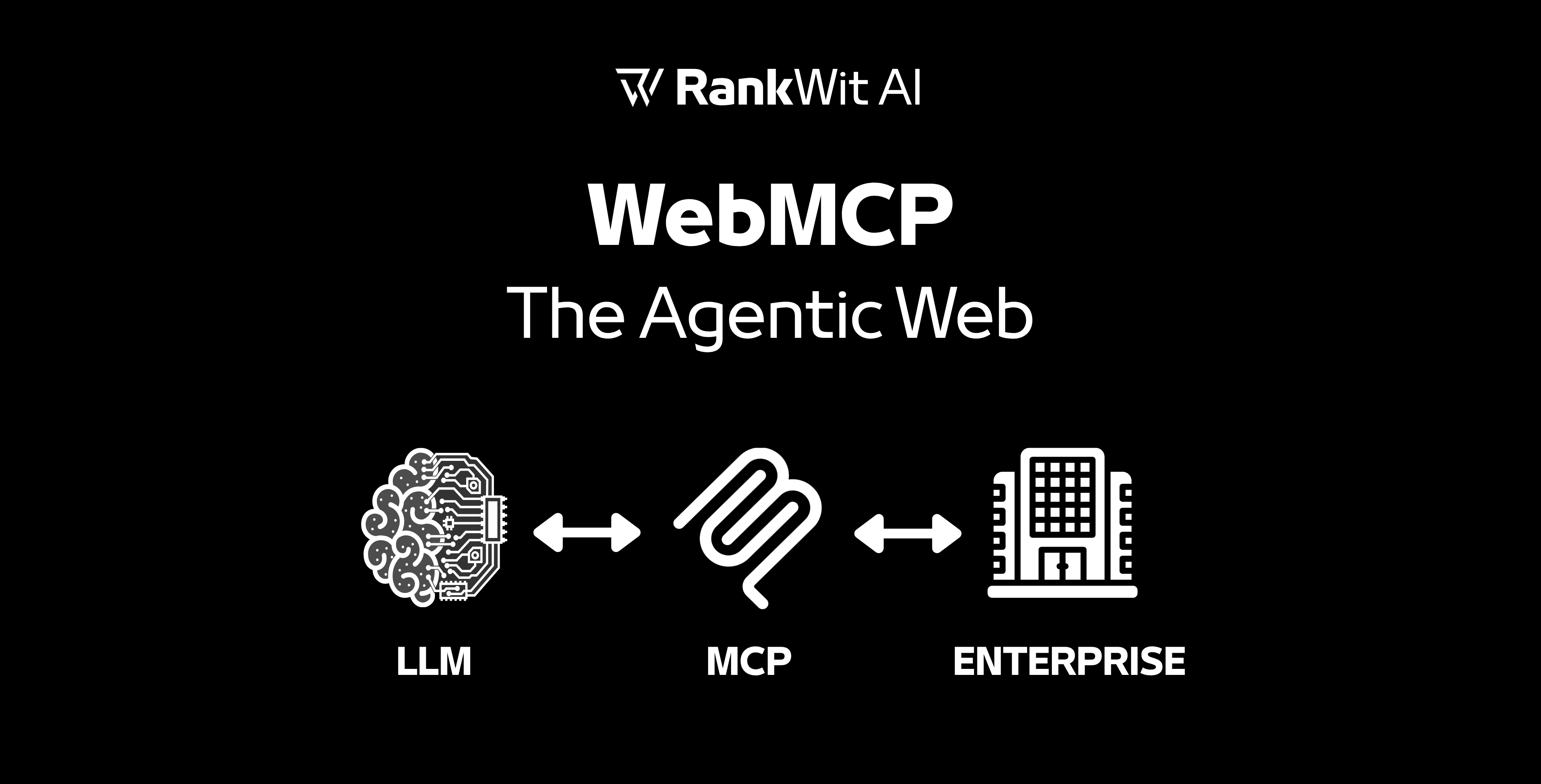
We are moving from a web of pixels to a web of actions.
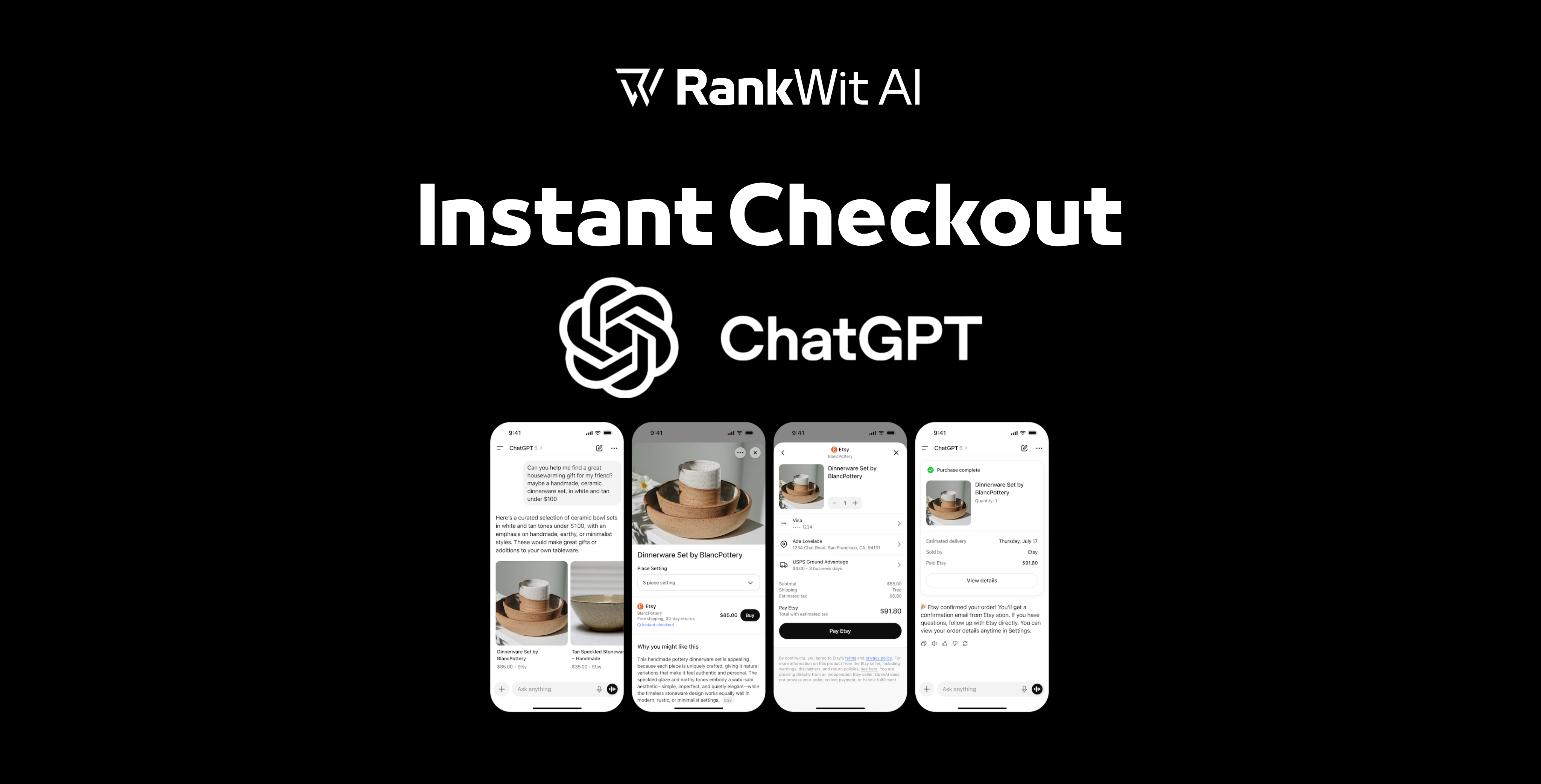
ChatGPT Instant Checkout is a new capability since 2025 developed by OpenAI that allows users to discover, configure, and purchase products directly within ChatGPT without leaving the conversation.
This functionality is powered by the Agentic Commerce Protocol (ACP), an open standard that defines how merchants’ systems interact with AI agents.
Merchants connect their product catalog through a structured product feed, expose checkout endpoints via the Agentic Checkout API, and process payments securely through delegated payment providers like Stripe.
Together, these layers create a smooth, conversational shopping experience that merges AI discovery with secure e-commerce execution.
Google's Generative AI Shopping is a set of capabilities within Google's Search Generative Experience (SGE) that transforms product discovery from a keyword-based process into a visual, conversational one.
Instead of scrolling through pages of blue links, users can now:
This approach is particularly powerful for apparel and fashion, where traditional keyword search often fails to capture the specificity of what a shopper has in mind. According to Google's internal data, 20% of apparel queries are five words or longer, a type of search that generative AI handles far more effectively than conventional engines.
Why it matters for GEO: Content and product listings that are well-structured, semantically rich, and paired with high-quality imagery are more likely to be surfaced in these AI-generated shopping results. Optimizing for this new discovery layer is now a core part of any AI visibility strategy.
Within our ecosystem, we evaluate AI platforms based on real profitability criteria. We do not simply look for the most popular infrastructure, but for platforms that offer robust APIs, enterprise-grade data security, and native integration with existing systems to ensure immediate return on investment.
Google's AI-powered Virtual Try-On is a Google Shopping feature that uses generative AI to show how a specific garment looks on a real model matching the shopper's preferences.
Users can choose from 40 models varying in:
This helps shoppers make more confident purchase decisions without visiting a physical store, solving one of the biggest friction points in online apparel shopping: uncertainty about fit and appearance.
Google reported that products with Virtual Try-On enabled received significantly higher quality engagement, meaning shoppers spent more time interacting with those listings and were more likely to take actions such as clicking through or completing a purchase.
As Google extends Virtual Try-On to additional categories, brands that participate in the program and provide standardized, high-quality product images will benefit from stronger engagement signals and greater conversion potential. This feature is a clear indicator that visual content quality is becoming a ranking factor in AI-powered shopping experiences.