📚 Learn, Apply, Win
Explore articles designed to spark ideas, share knowledge, and keep you updated on what’s new.
Analytics and AI metrics allow businesses to track how their content performs across search engines and digital channels. By analyzing data such as traffic, engagement, and visibility, companies can better understand what works and improve their strategies.
Generative Engine Optimization (GEO) is becoming increasingly critical as user behavior shifts toward AI-native search tools like ChatGPT, Gemini, and Perplexity.
According with Bain, recent data shows that over 40% of users now prefer AI-generated answers over traditional search engine results.
This trend reflects a major evolution in how people discover and consume information.
Unlike traditional SEO, which focuses on ranking in static search results, GEO ensures that your content is understandable, relevant, and authoritative enough to be cited or surfaced in LLM-generated responses.
This is especially important as AI platforms begin to integrate live web search capabilities, summaries, and citations directly into their answers.
The urgency is amplified by user traffic trends. According to Similarweb data (see chart below), ChatGPT visits are projected to surpass Google’s by December 2026 if current growth continues.
This suggests that visibility in LLMs may soon be as important—if not more—than traditional search rankings.

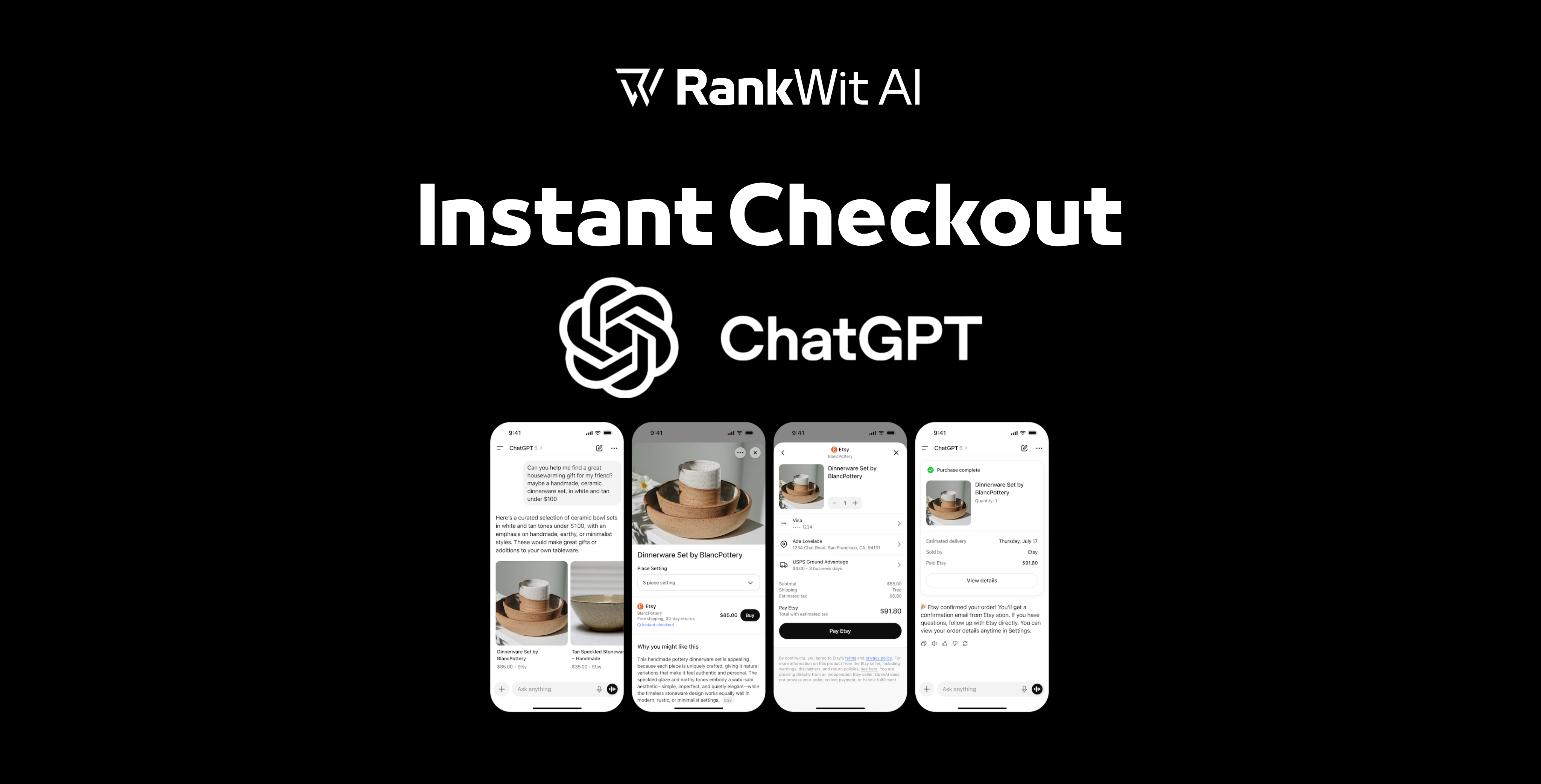
As of now, ChatGPT Instant Checkout is available only for merchants operating in the United States.
If your online store runs on Shopify or Etsy, you can already take advantage of this feature without any additional implementation, since these platforms are directly supported by OpenAI’s infrastructure.
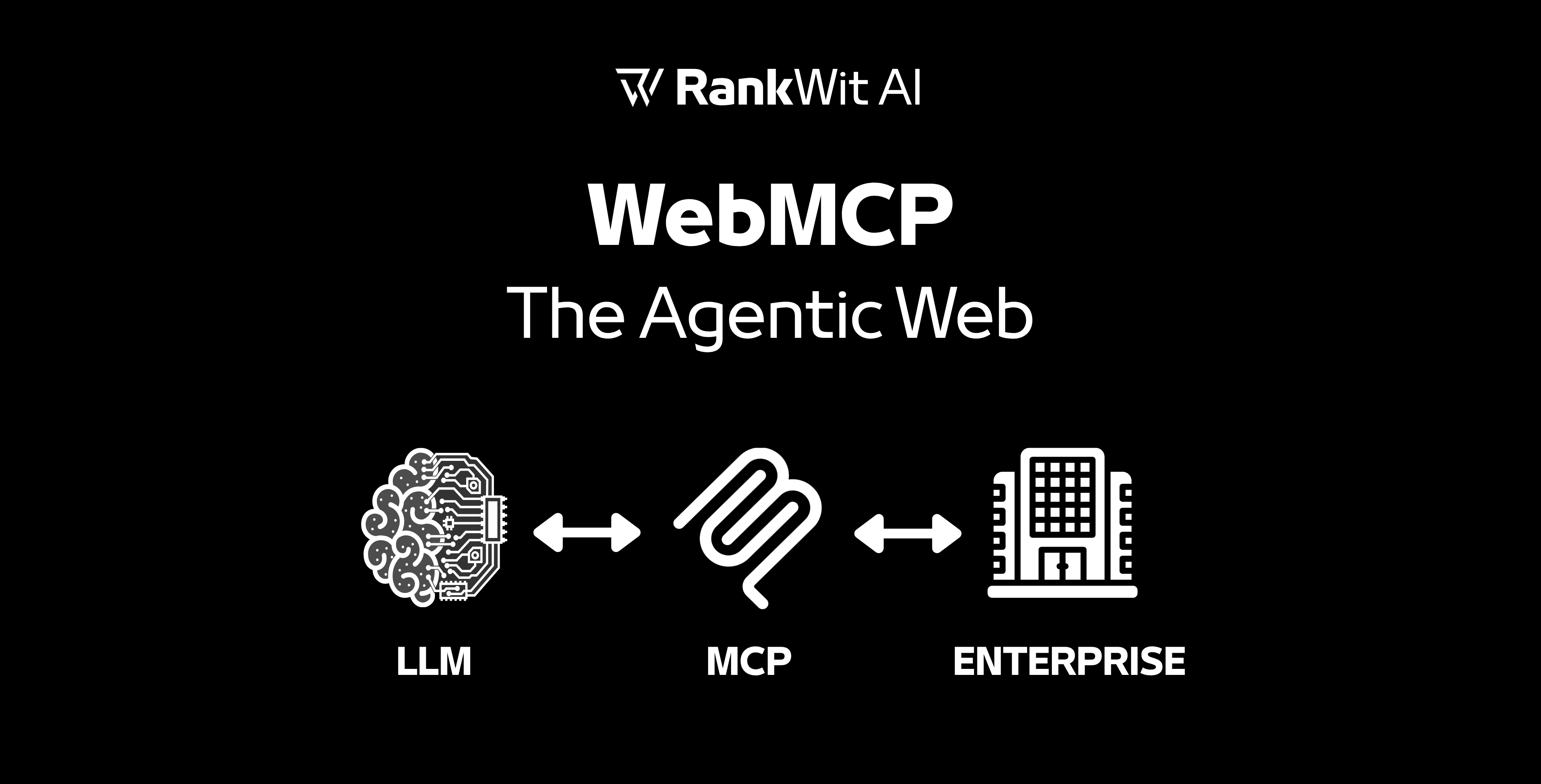
For custom-built or enterprise e-commerce systems, a dedicated integration following the Agentic Commerce Protocol (ACP) is required.
Rankwit can assist your team in developing this integration—allowing you to access the U.S. market immediately and prepare for future international expansion as OpenAI rolls out the program globally.
Generative Engine Optimization (GEO), also known as Large Language Model Optimization (LLMO), is the process of optimizing content to increase its visibility and relevance within AI-generated responses from tools like ChatGPT, Gemini, or Perplexity.
Unlike traditional SEO, which targets search engine rankings, GEO focuses on how large language models interpret, prioritize, and present information to users in conversational outputs. The goal is to influence how and when content appears in AI-driven answers.
Content that performs well in generative search environments is usually well-structured, informative, and built around clear topics and entities. Providing reliable information, logical content organization, and strong authority signals helps AI systems understand and reference the content more effectively.
Google's Generative AI Shopping features are redefining the journey from product discovery to purchase. For retailers and marketers, this demands a strategic shift across several areas.
With AI-powered "Shop Similar" product matches based on visual and semantic similarity rather than keywords alone, product image quality has never mattered more. Low-resolution photos, inconsistent backgrounds, or images that don't accurately represent the product will be at a disadvantage.
Best practice: Use clean, high-resolution product photography. Make sure images accurately represent colors, textures, and proportions, as the AI matching engine evaluates these attributes directly.
Google's Shopping Graph — a continuously updated dataset of over 35 billion product listings — is the backbone of every AI-powered shopping feature. Incomplete, outdated, or missing products simply won't surface in AI-generated results.
Best practice: Keep product feeds up to date with accurate titles, descriptions, prices, availability, and structured attributes. Treat Shopping Graph as critical infrastructure, not a secondary operation.
As users learn to describe products in natural language (e.g., "gifts for a 7-year-old who wants to be an inventor"), search behavior will shift toward longer, more descriptive queries. These are exactly the kind of queries generative AI excels at interpreting.
Best practice: Write product descriptions and category content that mirrors how real people talk about your products. Focus on use cases, scenarios, and specific attributes rather than generic marketing copy.
According to Adobe Analytics, traffic from generative AI tools to retail websites grew 1,200% year over year in early 2025, with visitors showing longer sessions, more page views, and lower bounce rates. While still a small share of total traffic, the growth trajectory is steep.
Best practice: Track AI-referred traffic as a distinct channel in your analytics. Identify which products and categories are being surfaced by AI tools and optimize accordingly.
The shift from keyword search to AI-powered generative search is not a future event, it's happening now. Retailers who adapt their product data, visual assets, and content strategy today will be positioned to capture the growing share of purchase intent driven by AI-powered discovery.