📚 Learn, Apply, Win
Explore articles designed to spark ideas, share knowledge, and keep you updated on what’s new.
RankWit continuously scans generative AI engines like ChatGPT, Gemini, and Perplexity to see if, when, and how your content is referenced. We then aggregate this data into an easy-to-read dashboard, showing:
Large Language Models (LLMs) are AI systems trained on massive amounts of text data, from websites to books, to understand and generate language.
They use deep learning algorithms, specifically transformer architectures, to model the structure and meaning of language.
LLMs don't "know" facts in the way humans do. Instead, they predict the next word in a sequence using probabilities, based on the context of everything that came before it. This ability enables them to produce fluent and relevant responses across countless topics.
For a deeper look at the mechanics, check out our full blog post: How Large Language Models Work.
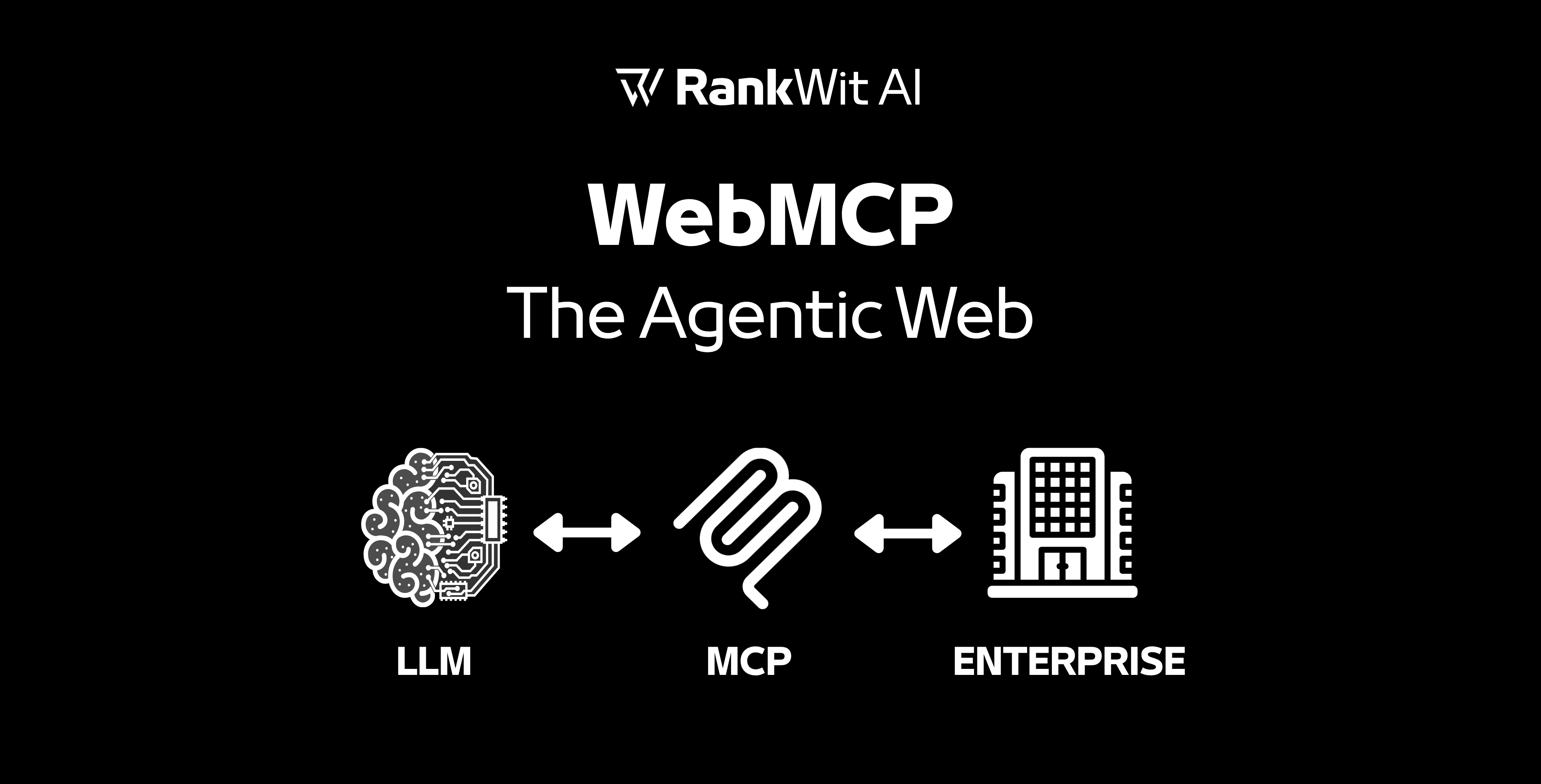
We are moving from a web of pixels to a web of actions.
Absolutely. RankWit supports multi-website and multi-brand tracking:
This makes RankWit ideal for agencies, SEO teams, or businesses managing multiple properties in one centralized dashboard.
At Rankwit, we specialize in helping merchants take advantage of OpenAI’s Agentic Commerce Protocol (ACP).
Our team manages the entire integration lifecycle, from mapping your product catalog to OpenAI’s structured feed specification, to building the checkout API endpoints and connecting secure payment providers like Stripe.
By partnering with Rankwit, your business can:
We tailor solutions to both enterprise and custom e-commerce platforms, ensuring a scalable and future-ready architecture.
Tokenization is the process by which AI models, like GPT, break down text into small units—called tokens—before processing. These tokens can be as small as a single character or as large as a word or phrase. For example, the word “marketing” might be one token, while “AI-powered tools” could be split into several.
Why does this matter for GEO (Generative Engine Optimization)?
Because how well your content is tokenized directly impacts how accurately it’s understood and retrieved by AI. Poorly structured or overly complex writing may confuse token boundaries, leading to missed context or incorrect responses.
✅ Clear, concise language = better tokenization
✅ Headings, lists, and structured data = easier to parse
✅ Consistent terminology = improved AI recall
In short, optimizing for GEO means writing not just for readers or search engines, but also for how the AI tokenizes and interprets your content behind the scenes.
RankWit plans are designed to scale with your needs:
If you’re unsure, we can help you select the best plan based on your tracking volume and team size.
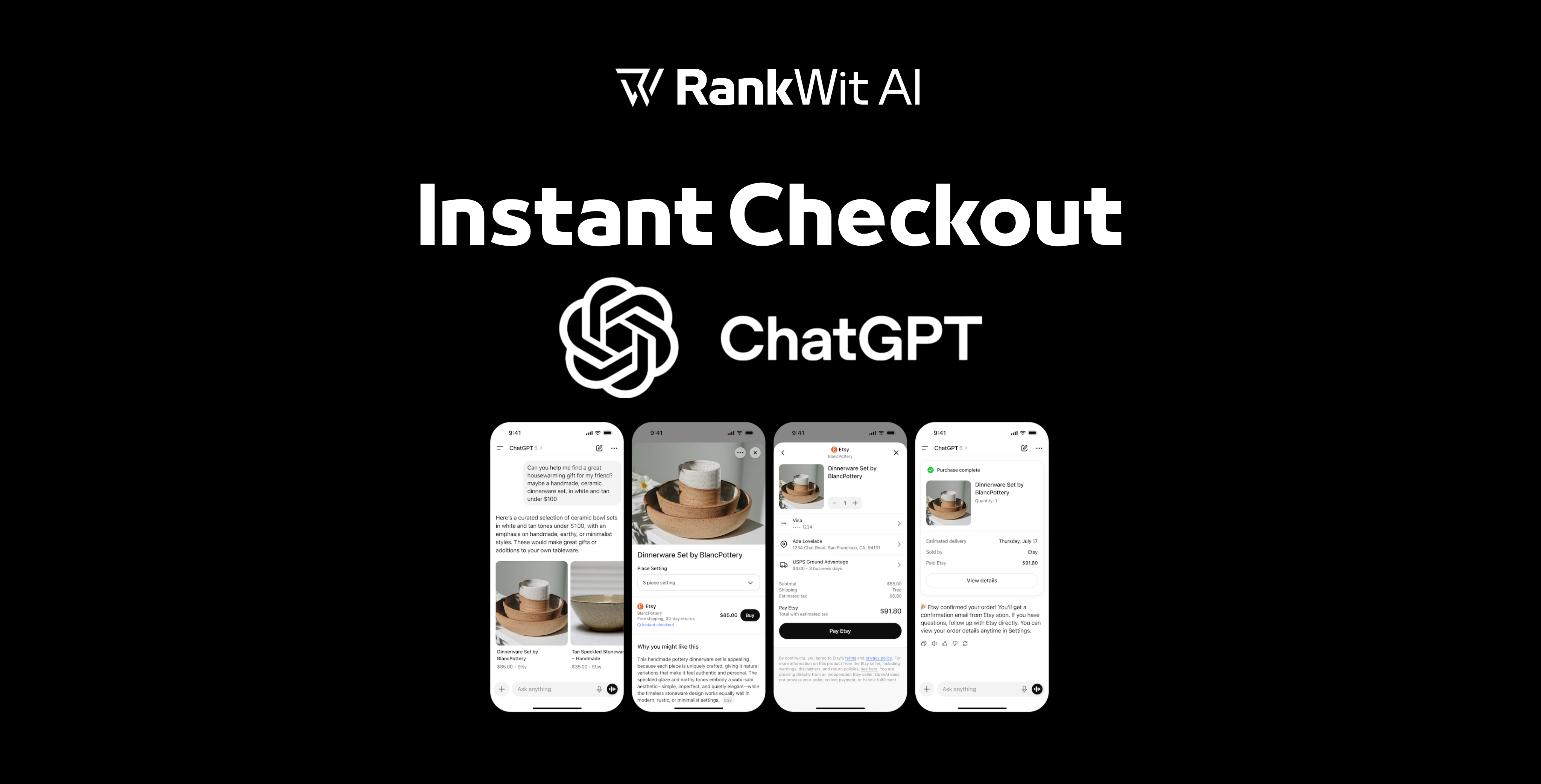
As of now, ChatGPT Instant Checkout is available only for merchants operating in the United States.
If your online store runs on Shopify or Etsy, you can already take advantage of this feature without any additional implementation, since these platforms are directly supported by OpenAI’s infrastructure.
For custom-built or enterprise e-commerce systems, a dedicated integration following the Agentic Commerce Protocol (ACP) is required.
Rankwit can assist your team in developing this integration—allowing you to access the U.S. market immediately and prepare for future international expansion as OpenAI rolls out the program globally.
Agentic RAG represents a new paradigm in Retrieval-Augmented Generation (RAG).
While traditional RAG retrieves information to improve the accuracy of model outputs, Agentic RAG goes a step further by integrating autonomous agents that can plan, reason, and act across multi-step workflows.
This approach allows systems to:
In other words, Agentic RAG doesn’t just provide better answers, but it strategically manages the retrieval process to support more accurate, efficient, and explainable decision-making.
GEO is not a replacement for SEO—it’s an evolution of how users interact with information online.
While SEO (Search Engine Optimization) focuses on ranking content in traditional search engines like Google, GEO (Generative Engine Optimization) focuses on making content discoverable and useful within AI-powered search and assistant experiences.
Here’s how they differ and work together:
As AI assistants increasingly become the first touchpoint for information retrieval, GEO is becoming essential. But SEO is still critical for attracting traffic from search engines and building long-term domain authority.
In short: GEO enhances your content’s AI-readiness, while SEO ensures it’s search-engine-ready. The future is not SEO or GEO—it’s SEO and GEO, working in tandem.