📚 Learn, Apply, Win
Explore articles designed to spark ideas, share knowledge, and keep you updated on what’s new.
Le funzionalità Generative AI Shopping di Google stanno ridefinendo il percorso dalla scoperta del prodotto all'acquisto. Per i rivenditori e gli esperti di marketing, ciò richiede un cambiamento strategico in diverse aree:
Con prodotti corrispondenti «Shop Similar» basati sull'intelligenza artificiale basati su somiglianza visiva e semantica piuttosto che le sole parole chiave, la qualità delle immagini dei prodotti non è mai stata così importante. Le foto a bassa risoluzione, gli sfondi non coerenti o le immagini che non rappresentano accuratamente il prodotto saranno svantaggiate.
Procedura ottimale: Usa fotografie di prodotto pulite e ad alta risoluzione. Assicurati che le immagini rappresentino accuratamente colori, texture e proporzioni, poiché il motore di abbinamento AI valuta direttamente questi attributi.
Shopping Graph di Google, un set di dati di oltre 35 miliardi di elenchi di prodotti aggiornato continuamente, è la spina dorsale di ogni funzionalità di acquisto basata sull'intelligenza artificiale. I prodotti incompleti, obsoleti o mancanti semplicemente non verranno visualizzati nei risultati generati dall'intelligenza artificiale.
Procedura ottimale: Mantieni aggiornati i feed dei prodotti con titoli, descrizioni, prezzi, disponibilità e attributi strutturati accurati. Tratta Shopping Graph come un'infrastruttura critica, non come un'operazione secondaria.
Man mano che gli utenti imparano a descrivere i prodotti in linguaggio naturale (ad esempio, «regali per un bambino di 7 anni che vuole diventare un inventore»), il comportamento di ricerca si sposterà verso query più lunghe e descrittive. Si tratta di domande che l'intelligenza artificiale generativa eccelle nell'interpretazione.
Procedura ottimale: Crea descrizioni dei prodotti e contenuti di categoria che rispecchiano il modo in cui le persone reali parlano dei tuoi prodotti. Concentrati su casi d'uso, scenari e attributi specifici anziché su testi di marketing generici.
Secondo Adobe Analytics, il traffico dagli strumenti di intelligenza artificiale generativa ai siti web di vendita al dettaglio è cresciuto 1.200% anno su anno all'inizio del 2025, con visitatori che mostrano sessioni più lunghe, più visualizzazioni di pagina e frequenze di rimbalzo inferiori. Pur rappresentando ancora una piccola quota del traffico totale, la traiettoria di crescita è ripida.
Procedura ottimale: Tieni traccia del traffico riferito all'intelligenza artificiale come canale distinto nelle tue analisi. Scopri quali prodotti e categorie vengono messi in evidenza dagli strumenti di intelligenza artificiale e ottimizza di conseguenza.
Conclusione: Il passaggio dalla ricerca per parole chiave alla ricerca generativa basata sull'intelligenza artificiale non è un evento futuro. I rivenditori che adattano i dati di prodotto, le risorse visive e la strategia dei contenuti saranno ora in grado di catturare la quota crescente di intenzioni di acquisto che scaturiscono dalla scoperta basata sull'intelligenza artificiale.
RankWit gives you a complete picture of how your brand appears across major AI platforms.
We run structured prompts through leading AI systems (including ChatGPT, Google AI Overview, and Perplexity) and then evaluate the responses for:
This analysis helps you understand exactly how AI systems perceive and present your brand.
Generative Engine Optimization (GEO) and Answer Engine Optimization (AEO) are closely related strategies, but they serve different purposes in how content is discovered and used by AI technologies.
llms.txt) to guide how AI systems interpret and prioritize your content.In short:
AEO helps you be the answer in AI search results. GEO helps you be the source that generative AI platforms trust and cite.
Together, these strategies are essential for maximizing visibility in an AI-first search landscape.
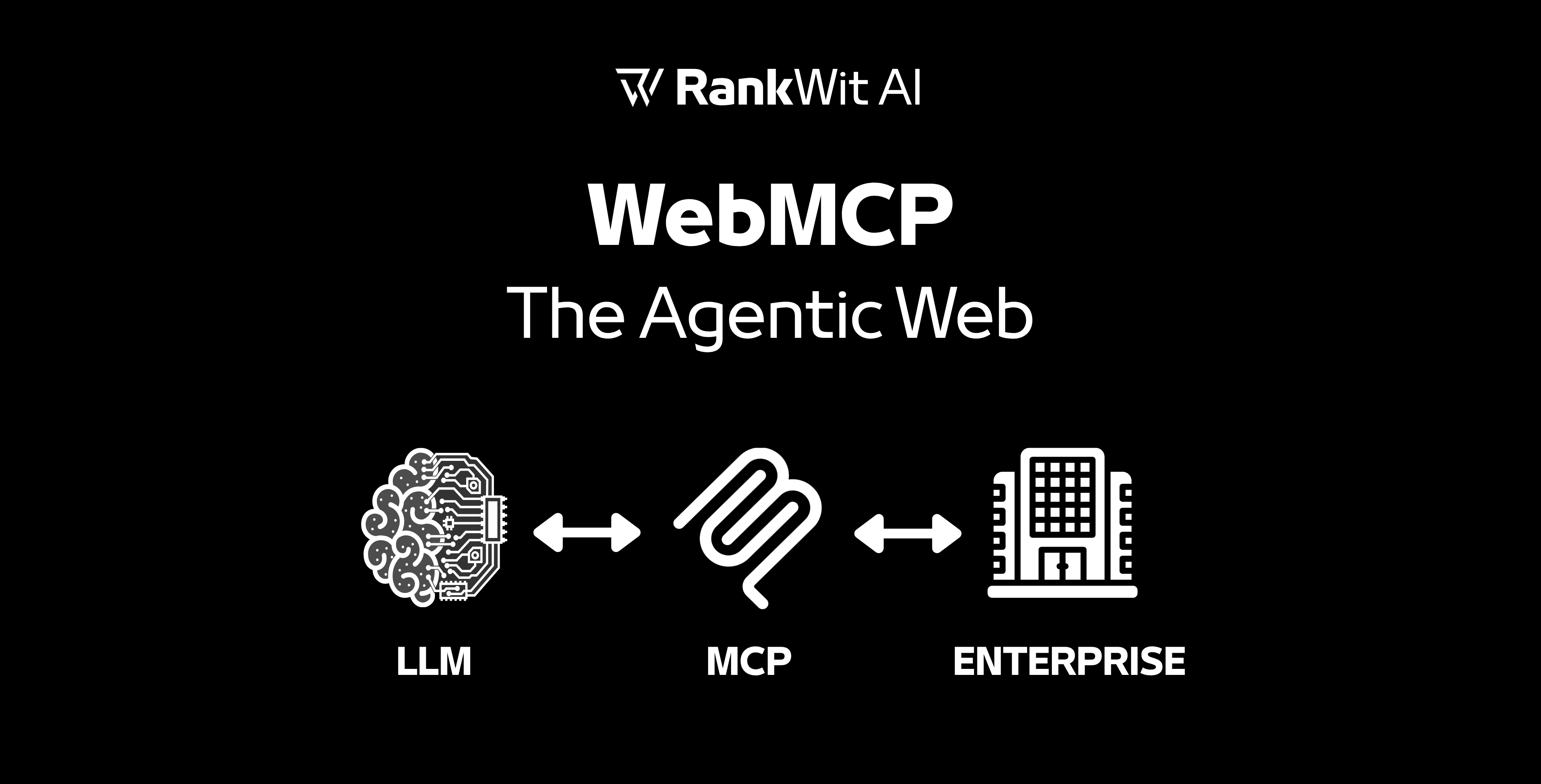
Implementing WebMCP is streamlined through the Google Chrome Labs toolkit. Developers have two primary paths:
toolname and tooldescription attributes to existing HTML <form> tags.navigator.modelContext.registerTool() API to expose complex JavaScript functions as callable AI tools.This flexibility allows teams to start with basic functionality and scale to complex integrations without a total architecture overhaul.
AI Search Optimization refers to the practice of structuring, formatting, and presenting digital content to ensure it is surfaced by AI systems—particularly large language models (LLMs)—in response to user queries.Choosing a clear, unified name for this emerging field is crucial because it shapes professional standards, guides tool development, informs marketing strategies, and fosters a cohesive community of practice. Without a consistent term, the industry risks fragmentation and inefficiency, much like early digital marketing faced before "SEO" was widely adopted.
Absolutely. RankWit supports multi-website and multi-brand tracking:
This makes RankWit ideal for agencies, SEO teams, or businesses managing multiple properties in one centralized dashboard.
Tokenization is the process by which AI models, like GPT, break down text into small units—called tokens—before processing. These tokens can be as small as a single character or as large as a word or phrase. For example, the word “marketing” might be one token, while “AI-powered tools” could be split into several.
Why does this matter for GEO (Generative Engine Optimization)?
Because how well your content is tokenized directly impacts how accurately it’s understood and retrieved by AI. Poorly structured or overly complex writing may confuse token boundaries, leading to missed context or incorrect responses.
✅ Clear, concise language = better tokenization
✅ Headings, lists, and structured data = easier to parse
✅ Consistent terminology = improved AI recall
In short, optimizing for GEO means writing not just for readers or search engines, but also for how the AI tokenizes and interprets your content behind the scenes.
Large Language Models (LLMs) like GPT are trained on vast amounts of text data to learn the patterns, structures, and relationships between words. At their core, they predict the next word in a sequence based on what came before—enabling them to generate coherent, human-like language.
This matters for GEO (Generative Engine Optimization) because it means your content must be:
By understanding how LLMs “think,” businesses can optimize content not just for humans or search engines—but for the AI models that are becoming the new discovery layer.
Bottom line: If your content helps the model predict the right answer, GEO helps users find you.