📚 Learn, Apply, Win
Explore articles designed to spark ideas, share knowledge, and keep you updated on what’s new.
AI-powered search systems analyze brand mentions, citations, and references across the web to evaluate credibility. When a brand is consistently mentioned by authoritative sources, it becomes easier for AI systems to recognize its expertise and include it in search results or generated answers.
Google's Generative AI Shopping is a set of capabilities within Google's Search Generative Experience (SGE) that transforms product discovery from a keyword-based process into a visual, conversational one.
Instead of scrolling through pages of blue links, users can now:
This approach is particularly powerful for apparel and fashion, where traditional keyword search often fails to capture the specificity of what a shopper has in mind. According to Google's internal data, 20% of apparel queries are five words or longer, a type of search that generative AI handles far more effectively than conventional engines.
Why it matters for GEO: Content and product listings that are well-structured, semantically rich, and paired with high-quality imagery are more likely to be surfaced in these AI-generated shopping results. Optimizing for this new discovery layer is now a core part of any AI visibility strategy.
Of course. RankWit works alongside your current team, whether internal or external. We manage the visibility layer on AI platforms (AIO), which traditional marketing agencies are not yet equipped to cover. We share every data point and action taken so that the organization maintains full strategic control over the territory’s narrative.
The speed of results varies based on your content quality, industry competition, and update cycles of generative engines.
However, most RankWit users start seeing measurable improvements in AI visibility within a few weeks.
Early wins may include appearing in smaller AI citations or niche queries.
Over time, consistent optimization leads to stronger placement across multiple platforms.
Tokenization is the process by which AI models, like GPT, break down text into small units—called tokens—before processing. These tokens can be as small as a single character or as large as a word or phrase. For example, the word “marketing” might be one token, while “AI-powered tools” could be split into several.
Why does this matter for GEO (Generative Engine Optimization)?
Because how well your content is tokenized directly impacts how accurately it’s understood and retrieved by AI. Poorly structured or overly complex writing may confuse token boundaries, leading to missed context or incorrect responses.
✅ Clear, concise language = better tokenization
✅ Headings, lists, and structured data = easier to parse
✅ Consistent terminology = improved AI recall
In short, optimizing for GEO means writing not just for readers or search engines, but also for how the AI tokenizes and interprets your content behind the scenes.
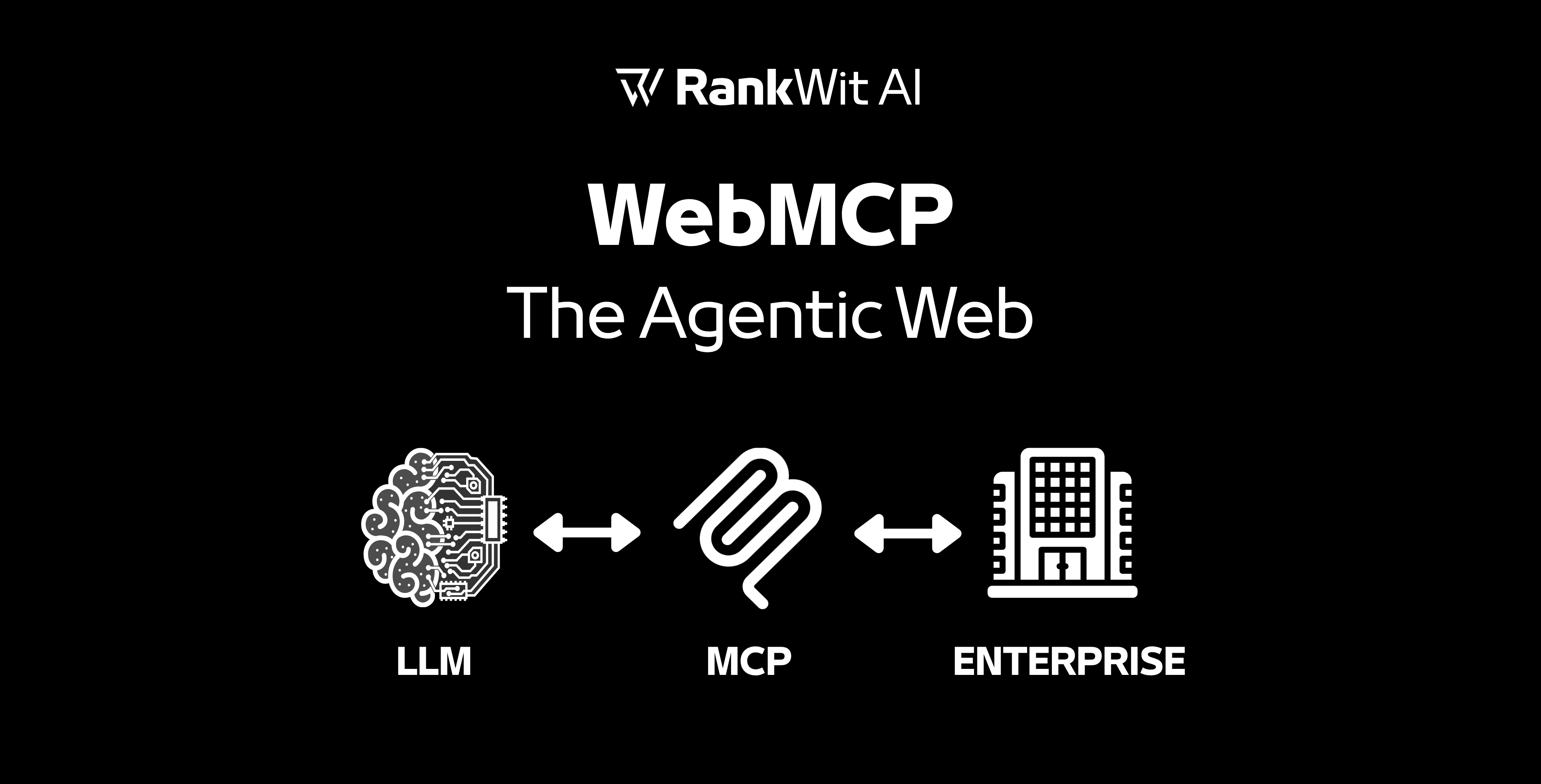
While traditional scraping is fragile and prone to breaking when a website's design changes, WebMCP provides a reliable "handshake" between the site and the AI.
RankWit analyzes your existing content and gives actionable, data-backed recommendations for improving your AI visibility. Suggestions include: