Why are large language models becoming essential technologies across many industries?
Large language models allow software systems to process complex language tasks such as summarization, translation, and question answering. Their ability to interpret and generate human language makes them valuable across industries including technology, marketing, education, and customer support.
Last updated at
April 13, 2026
Other FAQ
How do you measure AI visibility?
We run your target prompts across every major AI platform, weekly, and track exactly where and how your hotel is mentioned.
You get a live dashboard showing your AI Share of Voice versus competitors, citation trends, and which prompts are sending you bookings.
How can Rankwit help my business integrate with ChatGPT’s Agentic Commerce Protocol?
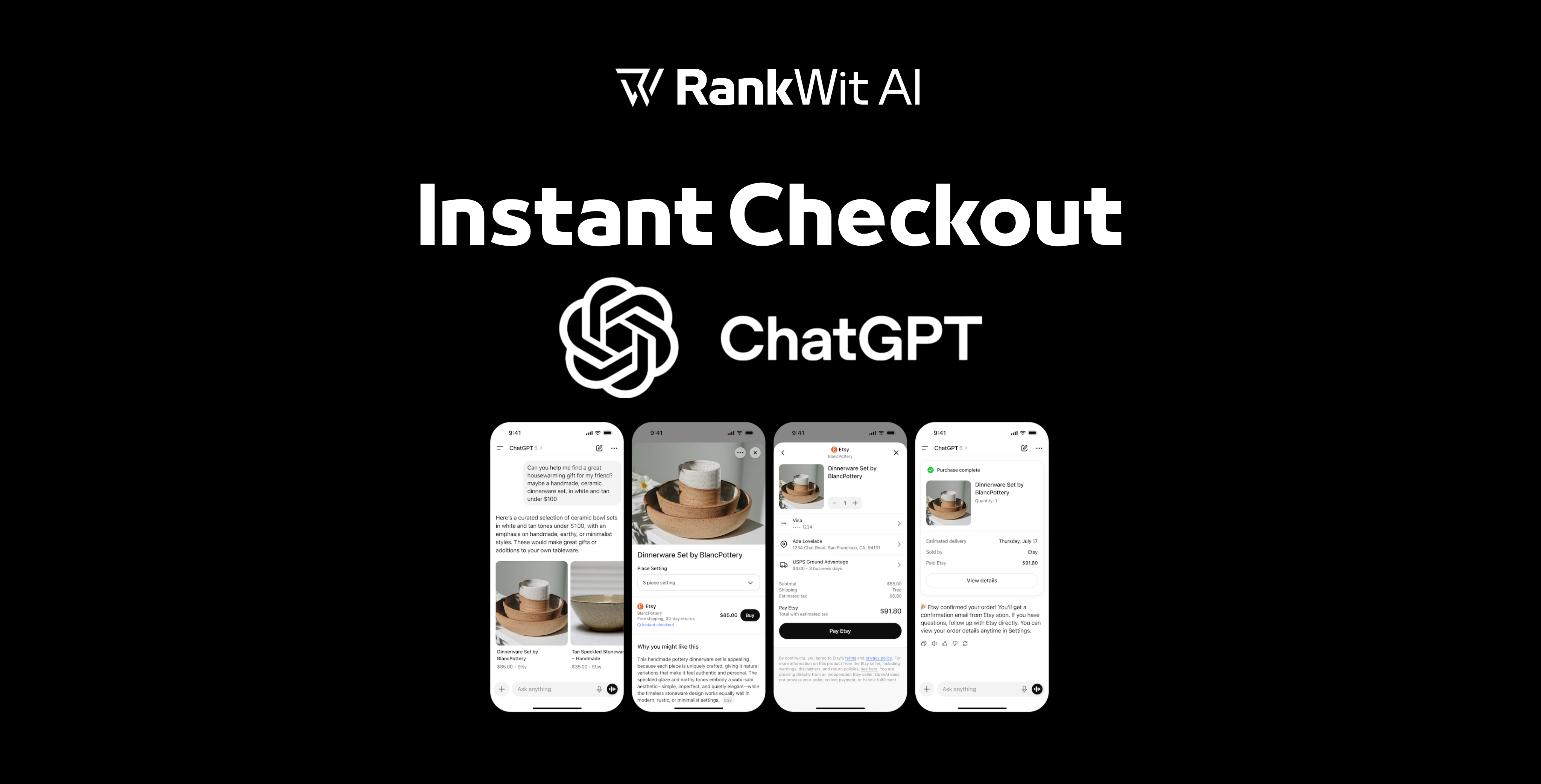
At Rankwit, we specialize in helping merchants take advantage of OpenAI’s Agentic Commerce Protocol (ACP). Our team manages the entire integration lifecycle, from mapping your product catalog to OpenAI’s structured feed specification, to building the checkout API endpoints and connecting secure payment providers like Stripe.
What exactly is included in the initial RankWit AI Audit?
We test how ChatGPT, Gemini, Perplexity, and Claude respond today when travelers ask about your destination, your category, or your direct competitors.
You receive a full report showing: where you are currently visible and where you are 'invisible' to AI; the specific prompts that are currently losing you bookings or visitors to the competition; and a roadmap to claim your AI Share of Voice. No commitment required.
Generative Engine Optimization (GEO) is becoming increasingly critical as user behavior shifts toward AI-native search tools like ChatGPT, Gemini, and Perplexity. According with Bain, recent data shows that over 40% of users now prefer AI-generated answers over traditional search engine results. This trend reflects a major evolution in how people discover and consume information.
Unlike traditional SEO, which focuses on ranking in static search results, GEO ensures that your content is understandable, relevant, and authoritative enough to be cited or surfaced in LLM-generated responses. This is especially important as AI platforms begin to integrate live web search capabilities, summaries, and citations directly into their answers.
The urgency is amplified by user traffic trends. According to Similarweb data (see chart below), ChatGPT visits are projected to surpass Google’s by December 2026 if current growth continues. This suggests that visibility in LLMs may soon be as important—if not more—than traditional search rankings.
Projection based on traffic from the last 6 months (source: Similarweb US).
Why is understanding user intent essential for creating content that performs well in modern search engines?
Understanding user intent allows businesses to create content that directly answers user questions and needs. When content aligns with search intent, search engines are more likely to consider it relevant and display it in search results.
What key elements should be included when optimizing content for AI-driven search systems?
Effective AI content optimization involves creating well-structured content with clear headings, strong topical relevance, and semantic connections between ideas. These elements help search engines and AI systems better interpret and rank content.
How can analytics and AI metrics help businesses understand the performance of their content and search visibility?
Analytics and AI metrics allow businesses to track how their content performs across search engines and digital channels. By analyzing data such as traffic, engagement, and visibility, companies can better understand what works and improve their strategies.
Why is it important for local businesses to optimize their online presence for AI-driven local search platforms?
As search engines increasingly rely on AI, local businesses must ensure their data is accurate, structured, and consistent across platforms. Optimizing business profiles, location information, and local content helps AI systems better understand and recommend businesses to nearby users
When will we start seeing the first results for our destinations?
Most tourism organizations see measurable improvements in AI citations and recommendations within 30–60 days.
Full and cumulative results typically emerge between 90 and 180 days, depending on the initial positioning of the territories and the complexity of the target tourism markets.
How does the EU AI Act impact SEO strategies, AI-generated content, and search engine transparency requirements in 2026 and beyond?
Compliance with the EU AI Act is fundamental to our search strategy. We help brands adapt to the new 2026 transparency obligations, ensuring their content is properly labeled and that their recommendation systems meet limited-risk standards—protecting both their reputation and visibility in international markets.
Stay inspired with the latest stories, tips, and insights. Explore articles designed to spark ideas, share knowledge, and keep you updated on what’s new.
.svg)