📚 Learn, Apply, Win
Explore articles designed to spark ideas, share knowledge, and keep you updated on what’s new.
Integrating AI into SEO allows businesses to analyze large datasets, identify search trends, and optimize content more efficiently. AI tools can support keyword research, content optimization, and performance analysis, helping companies improve their search visibility.
We test how ChatGPT, Gemini, Perplexity, and Claude respond today when travelers ask about your destination, your category, or your direct competitors.
You receive a full report showing: where you are currently visible and where you are 'invisible' to AI; the specific prompts that are currently losing you bookings or visitors to the competition; and a roadmap to claim your AI Share of Voice. No commitment required.
Large Language Models (LLMs) like GPT are trained on vast amounts of text data to learn the patterns, structures, and relationships between words. At their core, they predict the next word in a sequence based on what came before—enabling them to generate coherent, human-like language.
This matters for GEO (Generative Engine Optimization) because it means your content must be:
By understanding how LLMs “think,” businesses can optimize content not just for humans or search engines—but for the AI models that are becoming the new discovery layer.
Bottom line: If your content helps the model predict the right answer, GEO helps users find you.
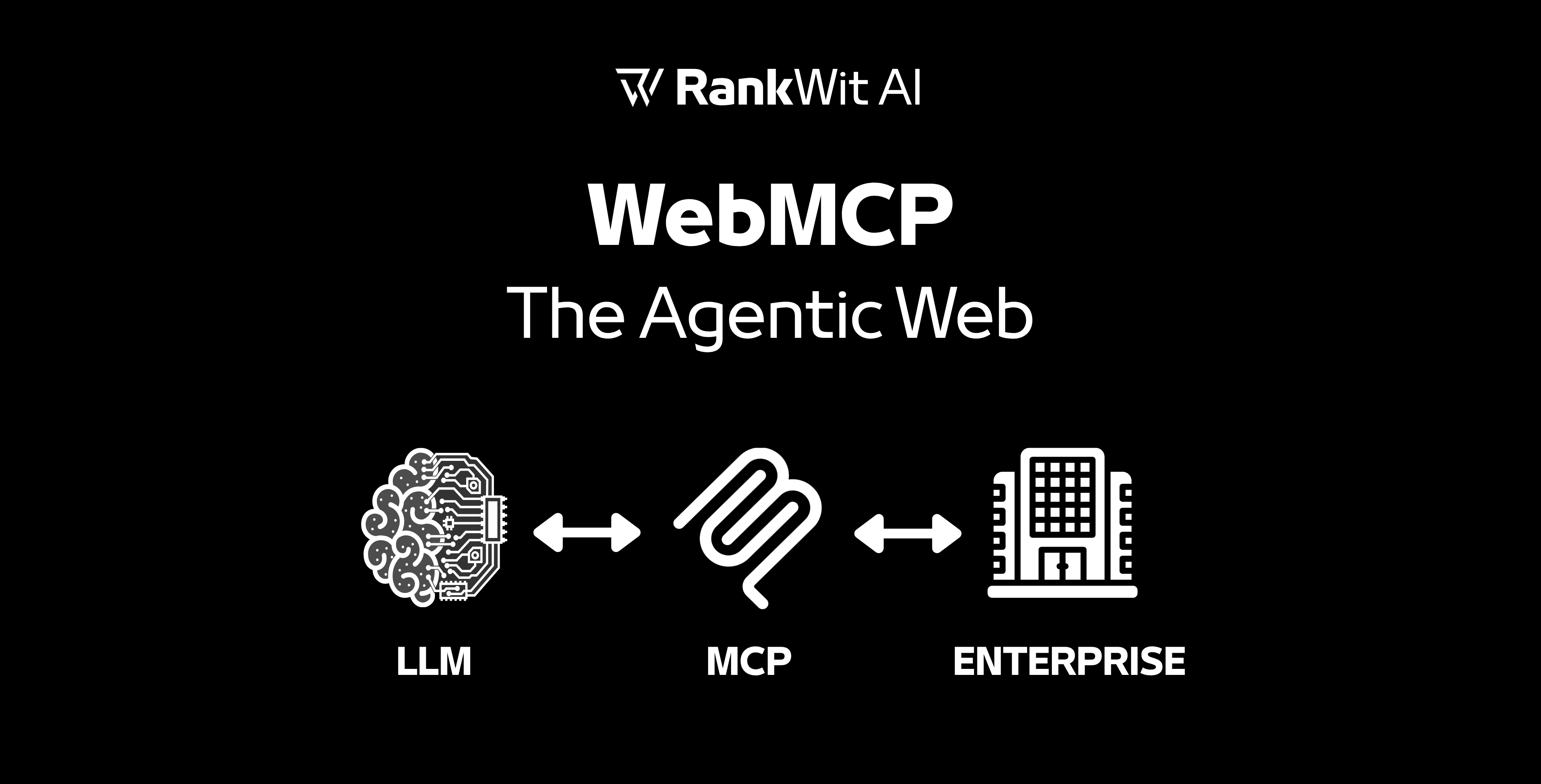
We are moving from a web of pixels to a web of actions.
RAG (Retrieval-Augmented Generation) is a cutting-edge AI technique that enhances traditional language models by integrating an external search or knowledge retrieval system. Instead of relying solely on pre-trained data, a RAG-enabled model can search a database or knowledge source in real time and use the results to generate more accurate, contextually relevant answers.
For GEO, this is a game changer.
GEO doesn't just respond with generic language—it retrieves fresh, relevant insights from your company’s knowledge base, documents, or external web content before generating its reply. This means:
By combining the strengths of generation and retrieval, RAG ensures GEO doesn't just sound smart—it is smart, aligned with your source of truth.
Google's AI-powered Virtual Try-On is a Google Shopping feature that uses generative AI to show how a specific garment looks on a real model matching the shopper's preferences.
Users can choose from 40 models varying in:
This helps shoppers make more confident purchase decisions without visiting a physical store, solving one of the biggest friction points in online apparel shopping: uncertainty about fit and appearance.
Google reported that products with Virtual Try-On enabled received significantly higher quality engagement, meaning shoppers spent more time interacting with those listings and were more likely to take actions such as clicking through or completing a purchase.
As Google extends Virtual Try-On to additional categories, brands that participate in the program and provide standardized, high-quality product images will benefit from stronger engagement signals and greater conversion potential. This feature is a clear indicator that visual content quality is becoming a ranking factor in AI-powered shopping experiences.