What’s RAG (Retrieval-Augmented Generation), and why is it critical for GEO?

RAG (Retrieval-Augmented Generation) is a cutting-edge AI technique that enhances traditional language models by integrating an external search or knowledge retrieval system. Instead of relying solely on pre-trained data, a RAG-enabled model can search a database or knowledge source in real time and use the results to generate more accurate, contextually relevant answers.

For GEO, this is a game changer.
GEO doesn't just respond with generic language—it retrieves fresh, relevant insights from your company’s knowledge base, documents, or external web content before generating its reply. This means:

  • More accurate and grounded answers
  • Up-to-date responses, even in dynamic environments
  • Context-aware replies tied to your data and terminology

By combining the strengths of generation and retrieval, RAG ensures GEO doesn't just sound smart—it is smart, aligned with your source of truth.

Last updated at  
September 29, 2025
Other FAQ
What is tokenization, and why does it matter for GEO?
Arrow

Tokenization is the process by which AI models, like GPT, break down text into small units—called tokens—before processing. These tokens can be as small as a single character or as large as a word or phrase. For example, the word “marketing” might be one token, while “AI-powered tools” could be split into several.

Why does this matter for GEO (Generative Engine Optimization)?

Because how well your content is tokenized directly impacts how accurately it’s understood and retrieved by AI. Poorly structured or overly complex writing may confuse token boundaries, leading to missed context or incorrect responses.

Clear, concise language = better tokenization
Headings, lists, and structured data = easier to parse
Consistent terminology = improved AI recall

In short, optimizing for GEO means writing not just for readers or search engines, but also for how the AI tokenizes and interprets your content behind the scenes.

Read More
ArrowArrow right blue
What does the term "Agentic Web" mean in the context of WebMCP technology?
Arrow

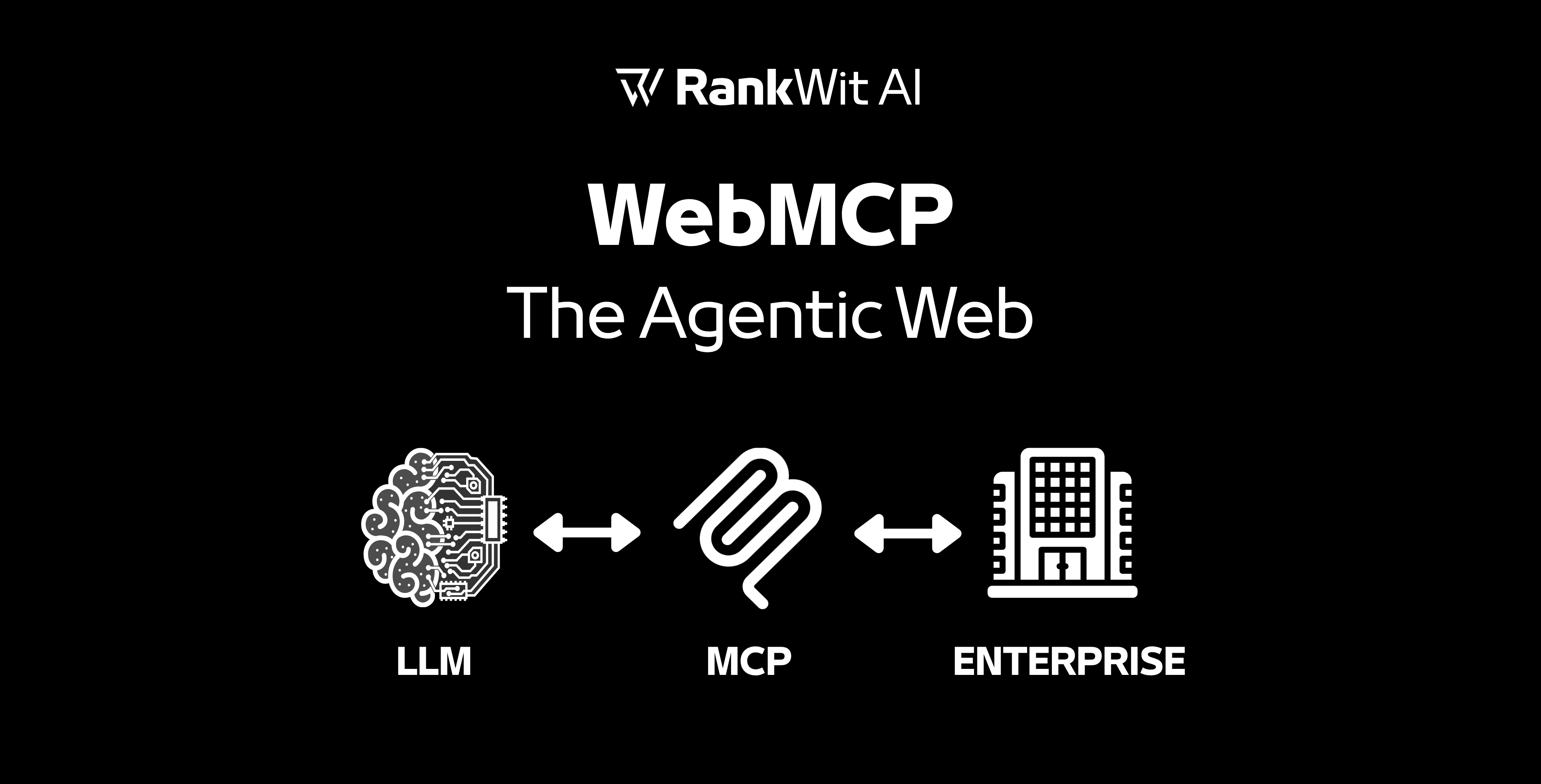
We are moving from a web of pixels to a web of actions.

  • Current Web: Users click, scroll, and read to finish a task.
  • Agentic Web (via WebMCP): A user gives a goal (e.g., "Find and book a flight under $400 for next Tuesday"), and the AI orchestrates the necessary steps across different sites using their exposed WebMCP tools.WebMCP provides the standardized language that allows these agents to navigate different platforms with the same ease a human would, but with the speed of an API.

Read More
ArrowArrow right blue
How do large language models actually work, and why does that matter for GEO?
Arrow

Large Language Models (LLMs) like GPT are trained on vast amounts of text data to learn the patterns, structures, and relationships between words. At their core, they predict the next word in a sequence based on what came before—enabling them to generate coherent, human-like language.

This matters for GEO (Generative Engine Optimization) because it means your content must be:

  • Well-structured so LLMs can interpret and reuse it effectively.
  • Clear and specific, as models rely on patterns to make accurate predictions.
  • Contextually rich, because LLMs use surrounding context to generate responses.

By understanding how LLMs “think,” businesses can optimize content not just for humans or search engines—but for the AI models that are becoming the new discovery layer.

Bottom line: If your content helps the model predict the right answer, GEO helps users find you.

Read More
ArrowArrow right blue
What is ChatGPT Shopping Research and how does it work?
Arrow

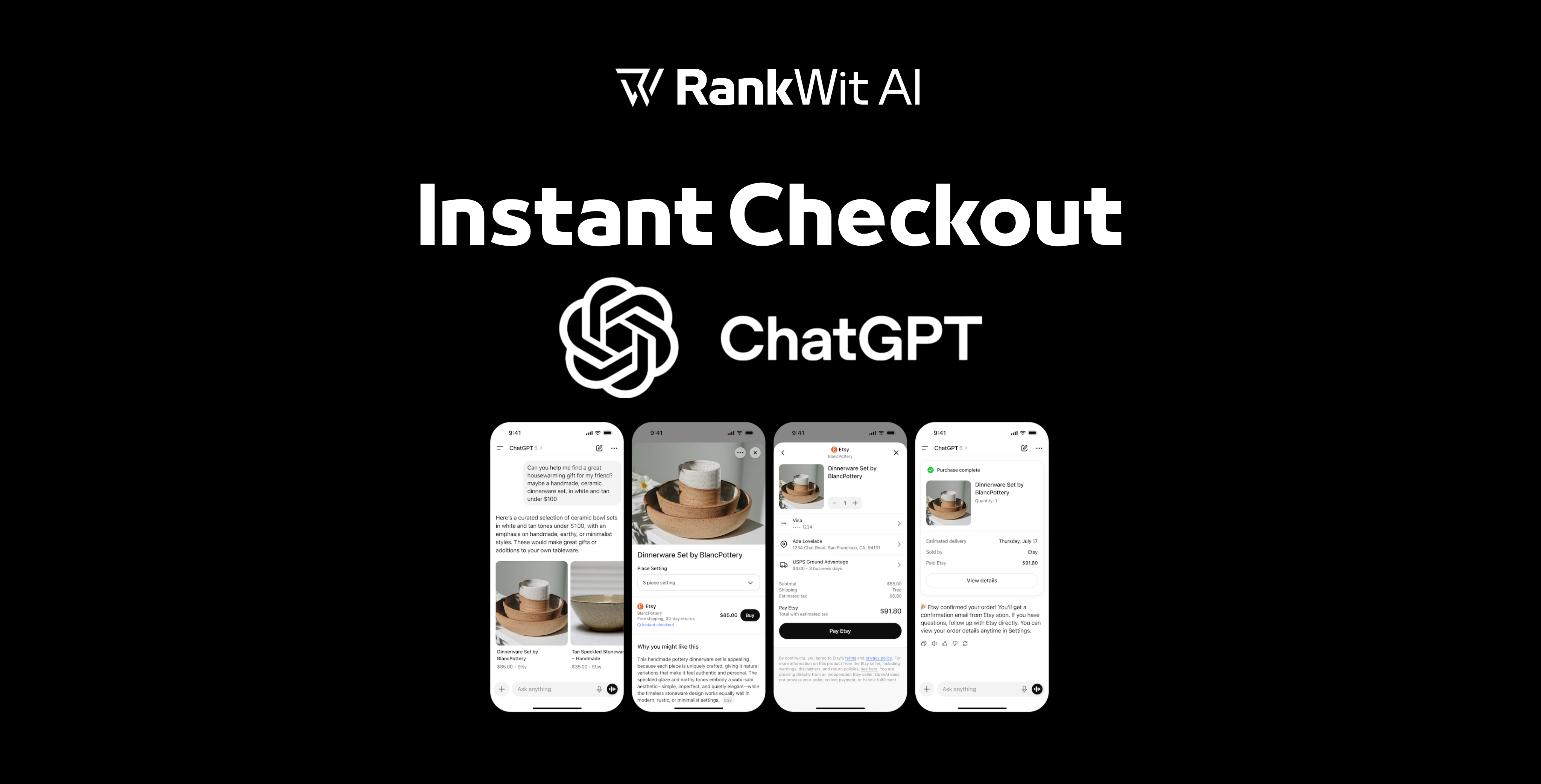
Shopping Research is a feature in ChatGPT that acts as a personalized shopping assistant.
Simply describe what you’re looking for, such as “a lightweight laptop for travel”, and ChatGPT gathers product details, reviews, specs, prices, and comparisons from the web.

You can refine the results by marking products as “Not interested” or “More like this”, helping ChatGPT understand your preferences.

At the end, you receive a custom buyer’s guide that explains the pros, cons, and trade-offs of each option, making your purchase process easier and more informed.

Read More
ArrowArrow right blue
How does RankWit monitor whether my brand is being cited in AI answers?
Arrow

RankWit continuously scans generative AI engines like ChatGPT, Gemini, and Perplexity to see if, when, and how your content is referenced. We then aggregate this data into an easy-to-read dashboard, showing:

  • Which platforms are citing your brand
  • The types of questions where you appear
  • How your visibility changes over time
    This monitoring ensures you know exactly where your brand is gaining traction—or losing ground—within AI-driven discovery.

Read More
ArrowArrow right blue
What’s the difference between GEO and AEO?
Arrow

Generative Engine Optimization (GEO) and Answer Engine Optimization (AEO) are closely related strategies, but they serve different purposes in how content is discovered and used by AI technologies.

  • AEO is focused on helping your content become the direct answer to user queries in AI-powered answer engines like Google's SGE (Search Generative Experience), Bing, or voice assistants. It emphasizes clear formatting, Q&A structure, and schema markup so that AI systems can easily extract and present your content in snippets or spoken responses.
  • GEO, on the other hand, is a broader approach designed to ensure your content is used, synthesized, or cited by generative AI models like ChatGPT, Gemini, Claude, and Perplexity. It involves creating high-quality, authoritative content that large language models (LLMs) recognize as trustworthy and relevant. It may also include using metadata tools (like llms.txt) to guide how AI systems interpret and prioritize your content.
In short:
AEO helps you be the answer in AI search results. GEO helps you be the source that generative AI platforms trust and cite.

Together, these strategies are essential for maximizing visibility in an AI-first search landscape.

Read More
ArrowArrow right blue
Which plan should I choose: Starter, Growth, or Enterprise?
Arrow

RankWit plans are designed to scale with your needs:

  • Starter: Best for freelancers, consultants, and small agencies beginning with AI visibility tracking.
  • Growth: Great for established agencies, marketing teams, and organizations with multiple websites.
  • Enterprise: Built for large companies needing advanced customization, higher credit volumes, and dedicated support.

If you’re unsure, we can help you select the best plan based on your tracking volume and team size.

Read More
ArrowArrow right blue
Can I cancel my subscription at any time?
Arrow

Yes. You can cancel your subscription, downgrade, or upgrade your plan at any time.

Read More
ArrowArrow right blue
Can I track multiple websites or brands?
Arrow

Absolutely. RankWit supports multi-website and multi-brand tracking:

  • Free: 1 website
  • Starter: up to 3website
  • Growth: Up to 10 websites
  • Business: Up to 50 websites
  • Enterprise: Unlimited websites

This makes RankWit ideal for agencies, SEO teams, or businesses managing multiple properties in one centralized dashboard.

Read More
ArrowArrow right blue
Is it difficult for developers to implement WebMCP on an existing website or application?
Arrow

Implementing WebMCP is streamlined through the Google Chrome Labs toolkit. Developers have two primary paths:

  • Declarative: Simply add toolname and tooldescription attributes to existing HTML <form> tags.
  • Imperative: Use the navigator.modelContext.registerTool() API to expose complex JavaScript functions as callable AI tools.This flexibility allows teams to start with basic functionality and scale to complex integrations without a total architecture overhaul.

Read More
ArrowArrow right blue

📚 Learn, Apply, Win

Stay inspired with the latest stories, tips, and insights.
Explore articles designed to spark ideas, share knowledge, and keep you updated on what’s new.