How does RankWit.AI implement structured data and knowledge graph architecture to increase brand authority in search engines and generative AI systems?

RankWit.AI deploys advanced schema strategies to transform content into machine-readable knowledge assets.

We do not implement structured data as a technical add-on — we design semantic architectures that position brands as authoritative nodes within their industry knowledge graph.

This dramatically improves visibility in SERPs and increases the likelihood of being surfaced in AI-generated responses.

Last updated at  
April 13, 2026
Other FAQ
How does WebMCP handle user privacy and prevent AI agents from performing unauthorized actions?
Arrow

Security is baked into the protocol's core. Unlike "headless" automation, WebMCP operates within the user’s current browser session:

  • Consent Gate: The browser acts as a gatekeeper, prompting the user to approve tool calls.
  • Scoped Access: AI agents only see the specific tools the developer has explicitly registered via the webmcp-tools suite.
  • Authentication: It leverages the site's existing login and security protocols, ensuring the AI never bypasses standard safety measures.

Read More
ArrowArrow right blue
What key elements should be included in a strong business case for AI and SEO initiatives?
Arrow

A strong business case should include clear goals, expected outcomes, cost analysis, and measurable performance indicators. These elements help organizations assess the feasibility and long-term value of AI and SEO initiatives.

Read More
ArrowArrow right blue
Why is academic and industry literature important for understanding developments in AI, search technologies, and digital marketing?
Arrow

Academic and industry literature offers valuable research, analysis, and expert perspectives on emerging technologies and digital strategies. Reviewing this literature helps professionals stay informed about innovations, methodologies, and best practices in AI and search optimization.

Read More
ArrowArrow right blue
How often does RankWit update AI visibility data?
Arrow

RankWit refreshes your AI visibility data every 24 hours by default, ensuring you always have an accurate and up-to-date picture of how your brand appears across major AI platforms.

On top of this, depending on your plan:

  • Starter: Daily updates
  • Growth: Daily updates + priority refresh cycles
  • Enterprise: Real-time or custom-scheduled updates, ideal for large teams and high-volume monitoring needs

This update frequency ensures you can quickly spot changes in rankings, sentiment shifts, and competitor activity—allowing your team to respond proactively and maintain strong AI visibility.

Read More
ArrowArrow right blue
How can companies use business cases to justify investments in AI-driven search and digital optimization?
Arrow

Businesses use business cases to evaluate the potential impact of adopting AI technologies and search optimization strategies. By analyzing costs, expected improvements, and measurable results, companies can make informed decisions about implementing new digital initiatives.

Read More
ArrowArrow right blue
Why is it important for local businesses to optimize their online presence for AI-driven local search platforms?
Arrow

As search engines increasingly rely on AI, local businesses must ensure their data is accurate, structured, and consistent across platforms. Optimizing business profiles, location information, and local content helps AI systems better understand and recommend businesses to nearby users

Read More
ArrowArrow right blue
What insights can industry case studies provide about the impact of AI on search visibility and digital marketing?
Arrow

Industry case studies highlight how AI technologies influence search rankings, content visibility, and user engagement. They demonstrate how companies adapt their strategies to new search technologies and provide measurable insights into the impact of AI-driven optimization.

Read More
ArrowArrow right blue
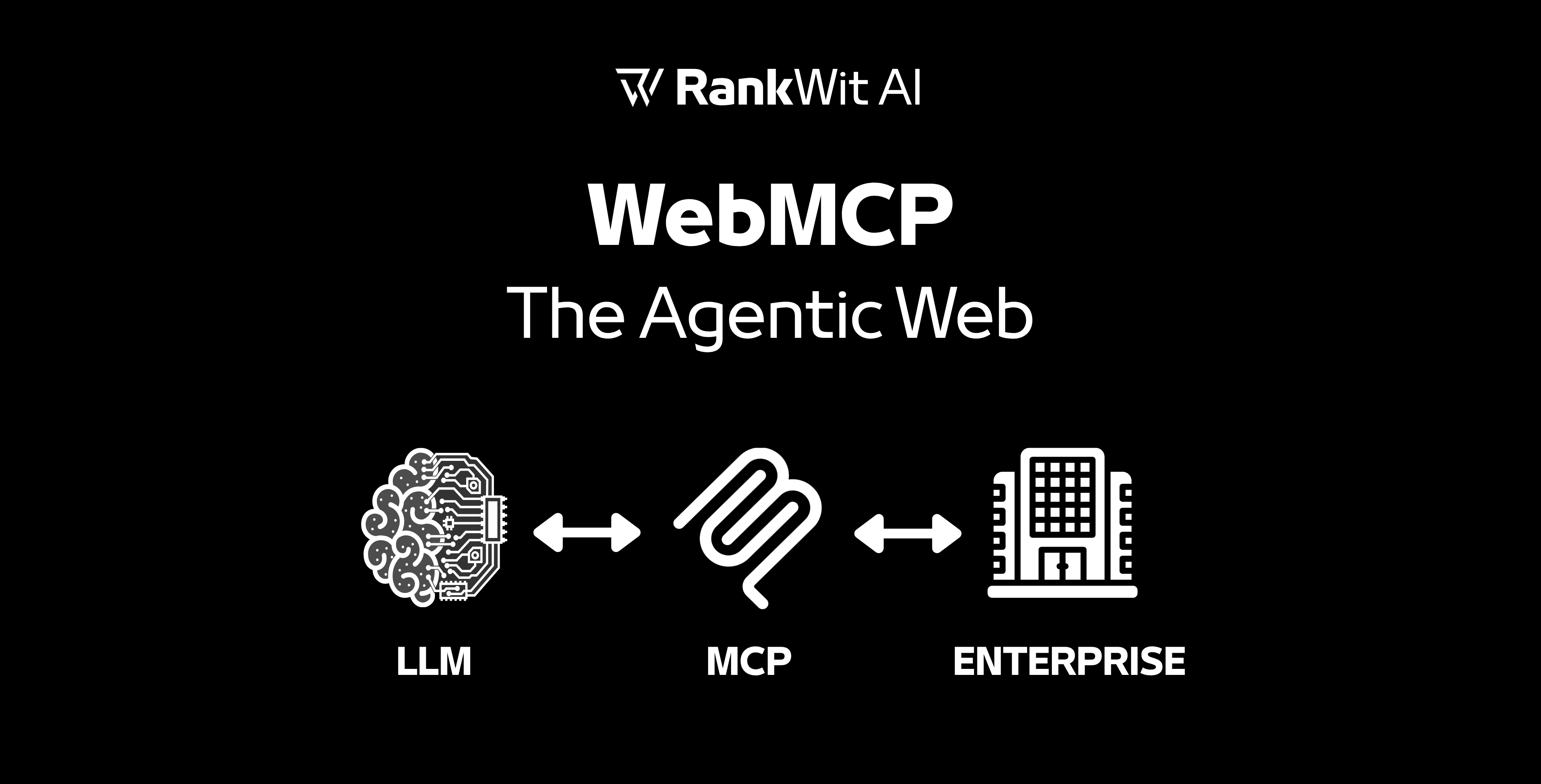
What role does WebMCP play in Retrieval-Augmented Generation (RAG) and real-time search?
Arrow

Traditional LLMs are limited by their training data "cutoff" dates. WebMCP bridges this gap by enabling Dynamic Context Injection:

  • The model identifies it needs live data (e.g., "What is the current inventory of Product X?").
  • It uses the WebMCP bidirectional channel to query the server.
  • The server returns structured data, which the AI then uses to generate an accurate, up-to-the-minute response.

Read More
ArrowArrow right blue
How do search engines and AI systems analyze user behavior to better understand search intent and deliver relevant results?
Arrow

Search engines and AI systems analyze factors such as search queries, user behavior, location, and context to determine what users are really looking for. This helps them deliver more relevant results and improve the overall search experience.

Read More
ArrowArrow right blue
What types of literature are most useful for professionals working with AI-driven search and digital optimization?
Arrow

Professionals working with AI-driven search benefit from reviewing academic studies, technical papers, and industry reports. These sources provide evidence-based insights that help explain how search technologies evolve and how optimization strategies should adapt.

Read More
ArrowArrow right blue