What strategies can businesses use to strengthen their authority signals for AI-powered search systems?
Businesses can strengthen their AI authority by earning media coverage, publishing expert content, building high-quality backlinks, and maintaining consistent brand mentions across trusted platforms. These signals help AI systems identify the brand as a reliable source within its industry.
Last updated at
April 13, 2026
Other FAQ
Why does GEO matter now?
Generative Engine Optimization (GEO) is becoming increasingly critical as user behavior shifts toward AI-native search tools like ChatGPT, Gemini, and Perplexity. According with Bain, recent data shows that over 40% of users now prefer AI-generated answers over traditional search engine results. This trend reflects a major evolution in how people discover and consume information.
Unlike traditional SEO, which focuses on ranking in static search results, GEO ensures that your content is understandable, relevant, and authoritative enough to be cited or surfaced in LLM-generated responses. This is especially important as AI platforms begin to integrate live web search capabilities, summaries, and citations directly into their answers.
The urgency is amplified by user traffic trends. According to Similarweb data (see chart below), ChatGPT visits are projected to surpass Google’s by December 2026 if current growth continues. This suggests that visibility in LLMs may soon be as important—if not more—than traditional search rankings.
Projection based on traffic from the last 6 months (source: Similarweb US).
How can B2B companies adapt their digital marketing strategies to remain visible in AI-powered search engines and generative search platforms?
To stay visible in AI-powered search environments, B2B companies must optimize content for semantic relevance, entities, and machine-readable signals. This includes creating authoritative content, implementing structured data, and building strong topical authority so AI systems can accurately understand and reference their expertise.
How should businesses adapt their content strategies so AI systems can better understand, interpret, and reference their information?
To optimize content for AI systems, businesses should focus on clear structure, semantic relevance, and well-defined topics. Content that is logically organized and built around recognized entities helps AI models interpret and reference information more accurately.
Why are large language models becoming essential technologies across many industries?
Large language models allow software systems to process complex language tasks such as summarization, translation, and question answering. Their ability to interpret and generate human language makes them valuable across industries including technology, marketing, education, and customer support.
How can websites structure their content so it can be effectively retrieved and used by Retrieval-Augmented Generation systems?
Content that is well-structured, informative, and organized around clear topics is easier for retrieval systems to access and use. Structured headings, semantic clarity, and authoritative information increase the chances that content will be retrieved and used by AI systems during response generation.
Generative Engine Optimization (GEO), also known as Large Language Model Optimization (LLMO), is the process of optimizing content to increase its visibility and relevance within AI-generated responses from tools like ChatGPT, Gemini, or Perplexity.
Unlike traditional SEO, which targets search engine rankings, GEO focuses on how large language models interpret, prioritize, and present information to users in conversational outputs. The goal is to influence how and when content appears in AI-driven answers.
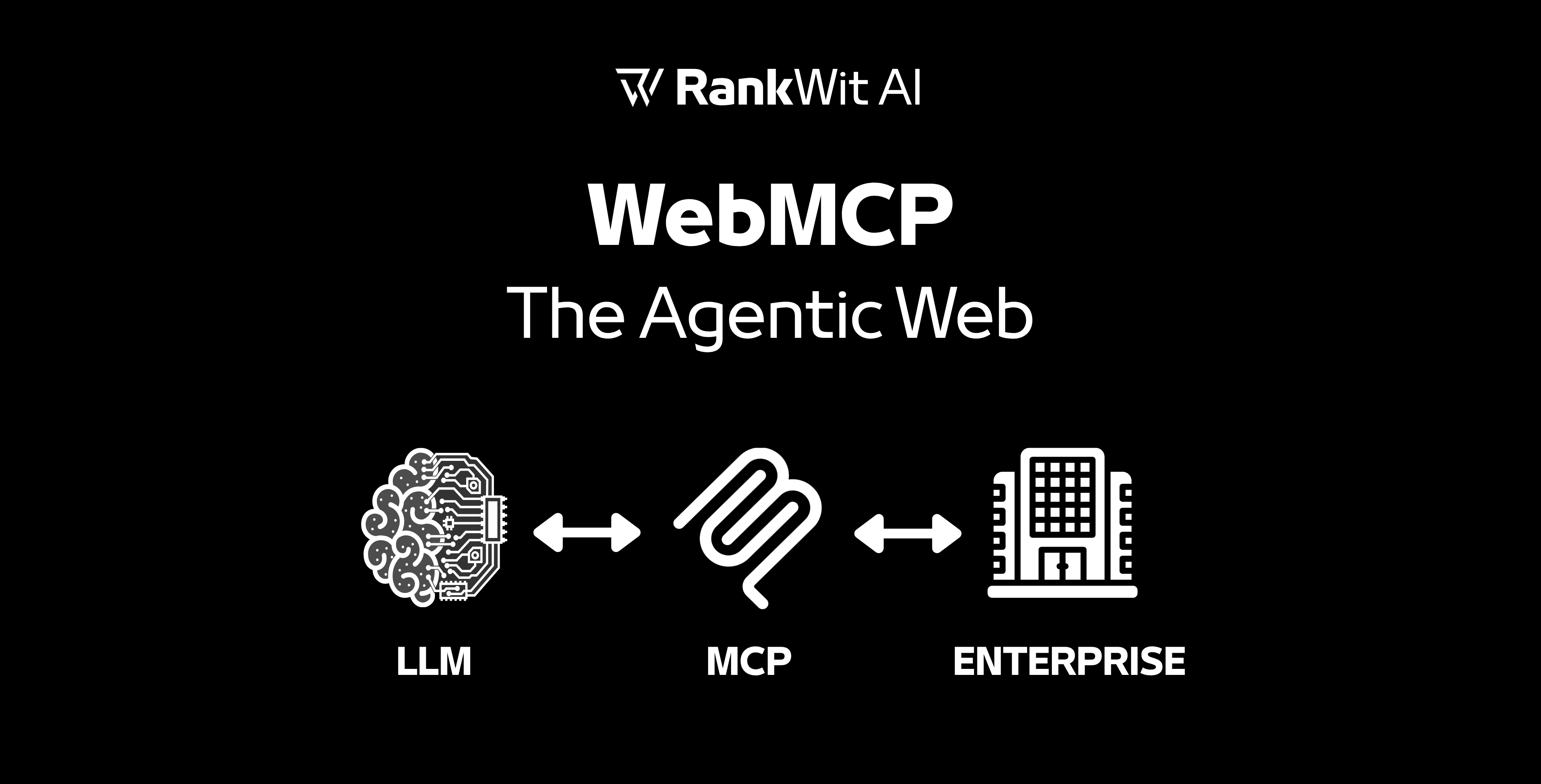
Is it difficult for developers to implement WebMCP on an existing website or application?
Implementing WebMCP is streamlined through the Google Chrome Labs toolkit. Developers have two primary paths:
Declarative: Simply add toolname and tooldescription attributes to existing HTML <form> tags.
Imperative: Use the navigator.modelContext.registerTool() API to expose complex JavaScript functions as callable AI tools.This flexibility allows teams to start with basic functionality and scale to complex integrations without a total architecture overhaul.
What makes AI search optimization different from traditional SEO strategies for B2B companies?
Traditional SEO often focused heavily on keyword targeting and ranking pages in search results. AI-driven search, however, prioritizes context, expertise, and relationships between entities. For B2B companies, this means creating deeper, more authoritative content that AI systems can trust and reference when generating answers.
Stay inspired with the latest stories, tips, and insights. Explore articles designed to spark ideas, share knowledge, and keep you updated on what’s new.
.svg)