📚 Learn, Apply, Win
Explore articles designed to spark ideas, share knowledge, and keep you updated on what’s new.
Future LLM optimization strategies will focus on semantic understanding, strong entity signals, structured knowledge, and high-quality information sources. These trends will help AI systems deliver more accurate and context-aware responses.
Generative Engine Optimization (GEO), also known as Large Language Model Optimization (LLMO), is the process of optimizing content to increase its visibility and relevance within AI-generated responses from tools like ChatGPT, Gemini, or Perplexity.
Unlike traditional SEO, which targets search engine rankings, GEO focuses on how large language models interpret, prioritize, and present information to users in conversational outputs. The goal is to influence how and when content appears in AI-driven answers.
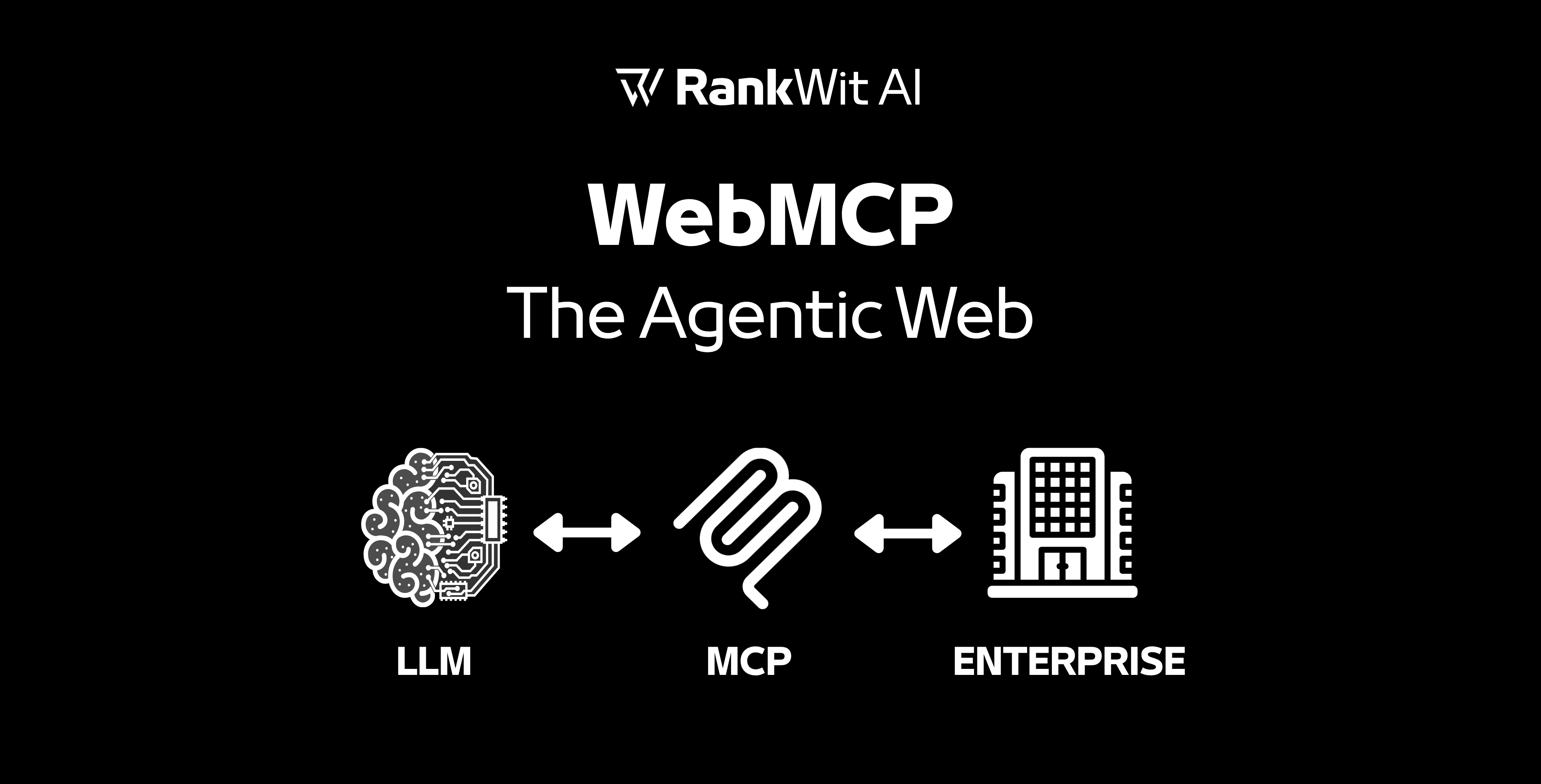
Traditional LLMs are limited by their training data "cutoff" dates. WebMCP bridges this gap by enabling Dynamic Context Injection:
RAG (Retrieval-Augmented Generation) is a cutting-edge AI technique that enhances traditional language models by integrating an external search or knowledge retrieval system. Instead of relying solely on pre-trained data, a RAG-enabled model can search a database or knowledge source in real time and use the results to generate more accurate, contextually relevant answers.
For GEO, this is a game changer.
GEO doesn't just respond with generic language—it retrieves fresh, relevant insights from your company’s knowledge base, documents, or external web content before generating its reply. This means:
By combining the strengths of generation and retrieval, RAG ensures GEO doesn't just sound smart—it is smart, aligned with your source of truth.
The transformer is the foundational architecture behind modern LLMs like GPT. Introduced in a groundbreaking 2017 research paper, transformers revolutionized natural language processing by allowing models to consider the entire context of a sentence at once, rather than just word-by-word sequences.
The key innovation is the attention mechanism, which helps the model decide which words in a sentence are most relevant to each other, essentially mimicking how humans pay attention to specific details in a conversation.
Transformers make it possible for LLMs to generate more coherent, context-aware, and accurate responses.
This is why they're at the heart of most state-of-the-art language models today.